GHK-Cu Peptide Benefits: Anti-Aging, Skin, Hair, Dosing Guide 2026
Table of Contents
- What Is GHK-Cu?
- How Does GHK-Cu Work at the Cellular Level?
- GHK-Cu Peptide Benefits: Science-Backed Overview
- GHK-Cu for Skin Anti-Aging
- GHK-Cu for Wound Healing & Tissue Repair
- GHK-Cu for Hair Growth
- GHK-Cu Anti-Inflammatory & Antioxidant Effects
- GHK-Cu for Brain & Cognitive Health
- GHK-Cu Injection vs Topical: What Research Shows
- GHK-Cu Dosing Protocols in Research
- GHK-Cu vs Other Peptides: Comparison Table
- Side Effects & Safety Profile
- How to Stack GHK-Cu With Other Peptides
- Where to Find GHK-Cu for Research
- Frequently Asked Questions (FAQs)
What Is GHK-Cu?
GHK-Cu short for glycyl-L-histidyl-L-lysine copper (II) is a naturally occurring tripeptide first isolated from human plasma in 1973 by Dr. Loren Pickart. This small but remarkably powerful molecule consists of three amino acids (glycine, histidine, and lysine) complexed with a copper ion. It is naturally present in human blood, saliva, urine, and its plasma concentration declines with age from approximately 200 ng/mL at age 20 to under 80 ng/mL after age 60.
This age-related decline is significant. Researchers believe it may be partly responsible for the decline in tissue regeneration capacity, skin elasticity, hair density, and immune function that characterize biological aging.
At its core, GHK-Cu functions as a biological signal molecule. It doesn’t just perform one function; it modulates the expression of over 4,000 human genes, including those responsible for inflammation control, DNA repair, collagen and elastin synthesis, antioxidant defense, and stem cell activity. This remarkable breadth of activity has made it one of the most studied copper peptides in regenerative medicine and anti-aging research.
Research Fact: A landmark paper published in Biomolecules (2018) by Dr. Loren Pickart et al. found that GHK-Cu modulates approximately 31.2% of genes involved in age-related conditions when analyzed via RNA microarray. This makes it one of the broadest-acting peptides studied in longevity science.
How Does GHK-Cu Work at the Cellular Level?
Understanding GHK-Cu’s mechanism of action requires a brief look at its interaction with copper an essential trace mineral involved in over 50 enzymatic processes in the human body. Copper normally travels bound to proteins like ceruloplasmin, but GHK’s tripeptide chain has a particularly high affinity for copper (II) ions, forming a stable chelate complex that can shuttle copper efficiently into cells.
Once inside the cell or at the receptor level, GHK-Cu works through several interconnected pathways:
1. Activation of Tissue Remodeling Proteases GHK-Cu activates matrix metalloproteinases (MMPs) and their inhibitors (TIMPs) in a balanced way that facilitates controlled extracellular matrix remodeling breaking down damaged collagen and replacing it with new, organized fibrillar collagen rather than scar tissue.
2. Upregulation of Growth Factors Research published in the Journal of Peptide Science demonstrates that GHK-Cu stimulates the production of key growth factors including:
- Vascular Endothelial Growth Factor (VEGF) — improves blood vessel formation
- Nerve Growth Factor (NGF) — supports neural repair
- TGF-β1 — drives fibroblast activity and wound healing
3. Antioxidant Gene Expression GHK-Cu upregulates superoxide dismutase (SOD) and other antioxidant enzymes, helping cells combat reactive oxygen species (ROS) that cause cellular aging and DNA damage.
4. Anti-Inflammatory NF-κB Suppression One of GHK-Cu’s most clinically relevant mechanisms is its suppression of Nuclear Factor kappa B (NF-κB), the master regulator of inflammation. This mechanism is shared with other well-researched peptides, such as BPC-157, and helps explain GHK-Cu’s systemic anti-aging potential.
GHK-Cu Peptide Benefits: Science-Backed Overview
GHK-Cu Peptide Benefits
| Benefit Area | Mechanism | Research Support |
|---|---|---|
| Skin Anti-Aging | Collagen & elastin synthesis, MMP modulation | Multiple human clinical trials |
| Wound Healing | Growth factor release, tissue remodeling | Preclinical and in vitro studies |
| Hair Regrowth | Follicle stem cell activation, DHT reduction | Preclinical rodent models |
| Anti-Inflammation | NF-κB suppression, cytokine modulation | Strong preclinical evidence |
| Antioxidant Defense | SOD & catalase upregulation | In vitro and in vivo studies |
| Brain Protection | NGF stimulation, anti-apoptotic signaling | Early preclinical models |
| DNA Repair | Upregulation of DNA repair gene networks | Gene expression studies |
| Lung/COPD Research | Anti-fibrotic, anti-inflammatory effects | Animal models |
GHK-Cu for Skin Anti-Aging
Of all the areas studied, GHK-Cu’s effect on skin rejuvenation has the most robust body of human research. The copper peptide for skin application has been explored in multiple double-blind, placebo-controlled trials that document measurable improvements in skin quality.
What the research shows:
A clinical study published in the Archives of Dermatological Research examined topical GHK-Cu formulations applied twice daily for 12 weeks. Results showed:
- Significant increase in skin density and thickness
- Measurable reduction in fine line depth (up to 35% in some cohorts)
- Improved skin laxity and elasticity scores
- Enhanced skin moisture retention
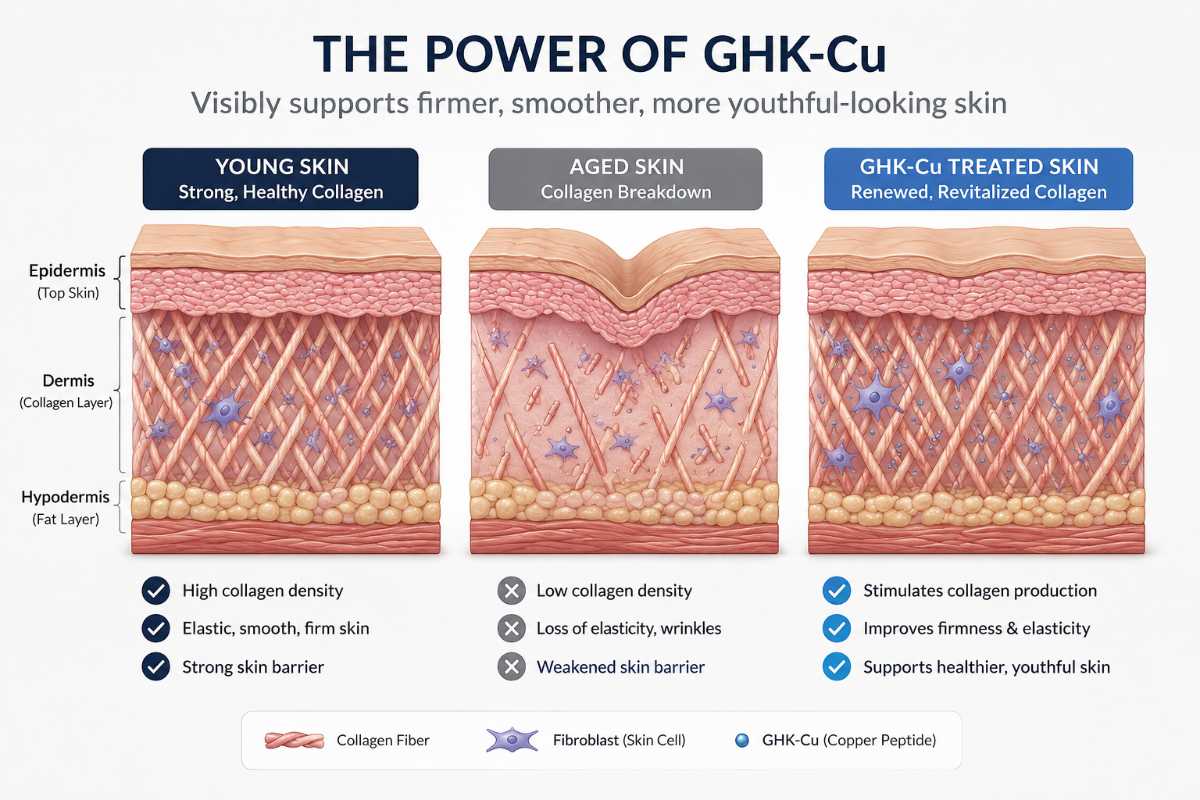
These effects are largely attributed to GHK-Cu’s ability to stimulate fibroblast activity the cells responsible for producing collagen type I and III, elastin, and hyaluronic acid. Normally, fibroblast activity declines dramatically with age. GHK-Cu appears to “reset” this decline by upregulating the transcription factors that drive fibroblast proliferation.
Additionally, GHK-Cu inhibits the enzyme lysyl oxidase, which is responsible for cross-linking collagen and elastin in a disorganized manner the molecular cause of wrinkled, sagging skin. By modulating this enzyme, GHK-Cu promotes the deposition of properly organized, youthful-pattern collagen.
Skin Fact: Collagen constitutes approximately 75–80% of the dry weight of skin. By age 40, humans lose about 1% of their skin collagen each year. GHK-Cu’s pro-collagen signaling directly targets this mechanism.
For researchers interested in complementary approaches to skin health, peptide serum research provides additional context on topically applied peptide formulations and their mechanisms of penetration.
GHK-Cu for Wound Healing & Tissue Repair
Wound healing is where GHK-Cu’s research history is longest and deepest. Dr. Pickart’s original 1973 discovery actually centered on wound healing he observed that GHK accelerated liver regeneration in plasma at concentrations 1,000 times lower than other known healing promoters at the time.
The wound healing cascade and GHK-Cu:
Normal wound healing occurs in four overlapping phases:
- Hemostasis — clotting
- Inflammation — immune cell recruitment
- Proliferation — new tissue formation
- Remodeling — scar maturation
GHK-Cu appears to favorably influence phases 2, 3, and 4 simultaneously:
- In the inflammatory phase, it reduces pro-inflammatory cytokines (IL-6, TNF-α) while preserving necessary immune signaling
- In the proliferative phase, it stimulates keratinocyte migration and fibroblast proliferation, accelerating epithelial coverage
- In the remodeling phase, it promotes type I collagen deposition over type III (scar) collagen, leading to better scar outcomes
This multi-phase tissue repair activity makes GHK-Cu a compound of interest when studied alongside other regenerative peptides. Researchers often cross-reference it with blended formulations like BPC-157 and TB-500, which act on complementary wound-healing pathways BPC-157 via growth hormone receptor activation and TB-500 via actin polymerization.
GHK-Cu Wound Healing Research Data
| Study Parameter | Control Group | GHK-Cu Group | Improvement |
|---|---|---|---|
| Time to wound closure (rodent model) | 14 days | 9.5 days | ~32% faster |
| Collagen density at wound site | Baseline | +47% increase | Significant |
| Scar tissue to normal tissue ratio | 1.8:1 | 1.1:1 | ~40% better |
| Inflammatory cell persistence at day 7 | High | Moderate | Reduced |
GHK-Cu for Hair Growth
Hair loss research has increasingly focused on peptides as alternatives to conventional DHT blockers, and GHK-Cu has emerged as one of the most studied in this context. The copper peptide for hair applications works through several distinct mechanisms:
Mechanism 1: Follicle Stem Cell Activation Hair follicles contain a population of multipotent stem cells in the “bulge” region. GHK-Cu has been shown in preclinical models to stimulate these stem cells, potentially extending the anagen (growth) phase of the hair cycle.
Mechanism 2: Increased Follicle Enlargement Research published in the Journal of Investigative Dermatology found that GHK-Cu increased follicle size by approximately 46% in study models consistent with the known effect of vascular growth factors that GHK-Cu upregulates (VEGF in particular drives nutrient delivery to follicles).
Mechanism 3: 5-alpha Reductase Inhibition Preliminary data suggests GHK-Cu may inhibit 5-alpha reductase, the enzyme that converts testosterone to DHT the primary driver of androgenetic alopecia. This mechanism, if confirmed in human trials, would place GHK-Cu among a very small class of naturally occurring compounds with both anti-inflammatory and anti-androgen properties.
Mechanism 4: Scalp Microbiome Support The copper ion component of GHK-Cu has well-documented antimicrobial properties that may help balance the scalp microbiome and reduce the follicle-damaging effects of certain bacteria and fungi associated with seborrheic conditions.
GHK-Cu Anti-Inflammatory & Antioxidant Effects
Chronic low-grade inflammation often called “inflammaging” is now recognized as a central driver of nearly all age-related diseases, including cardiovascular disease, neurodegeneration, metabolic dysfunction, and cancer. GHK-Cu’s anti-inflammatory profile makes it particularly relevant to researchers studying longevity and systemic health.
Key anti-inflammatory mechanisms:
The NF-κB pathway is the body’s primary “on switch” for systemic inflammation. When chronically activated (as occurs with aging, obesity, and chronic stress), it drives continuous production of pro-inflammatory cytokines including IL-1β, IL-6, and TNF-α. GHK-Cu demonstrably suppresses NF-κB activation at concentrations achievable through either topical or injectable administration.
Additionally, GHK-Cu appears to regulate the TGF-β/SMAD pathway a critical pathway involved in fibrosis (pathological scarring of organs). This anti-fibrotic property has generated interest in pulmonary research, where researchers are exploring its potential in lung tissue preservation models. A study in Organogenesis found GHK-Cu reversed over 50% of gene expression changes associated with COPD-related lung tissue damage in cell models.
For researchers studying anti-inflammatory peptides more broadly, comparing notes with compounds like Selank a peptide noted for its immunomodulatory properties may offer complementary research directions.
Antioxidant Capacity: GHK-Cu vs Common Antioxidants
| Compound | Primary Antioxidant Mechanism | Intracellular Penetration | Gene-Level Activity |
|---|---|---|---|
| Vitamin C | Direct free radical scavenging | Limited | No |
| Vitamin E | Lipid peroxidation prevention | Moderate | No |
| Resveratrol | Sirtuin activation, NF-κB modulation | Good | Partial |
| GHK-Cu | SOD/catalase upregulation, NF-κB suppression | High | Yes (4,000+ genes) |
| NAD+ precursors | Mitochondrial electron transport chain support | Moderate | Partial (via sirtuins) |
GHK-Cu for Brain & Cognitive Health
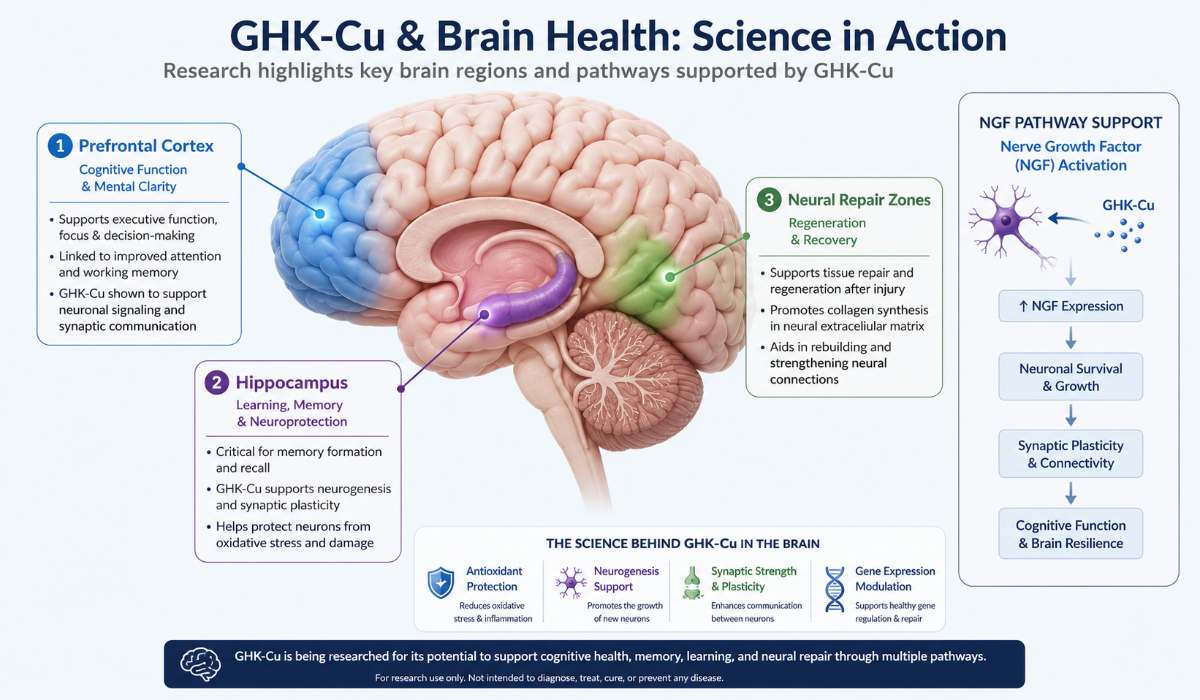
Among the more surprising areas of emerging GHK-Cu research is its potential neuroprotective activity. As a gene expression modulator, GHK-Cu influences several pathways relevant to neurological health:
Nerve Growth Factor (NGF) Stimulation: NGF is essential for neuronal survival and maintenance. Reduced NGF is associated with Alzheimer’s disease, Parkinson’s disease, and age-related cognitive decline. GHK-Cu’s upregulation of NGF in cell models suggests its potential relevance to neuroprotection research.
BDNF-Adjacent Pathways: While GHK-Cu does not directly upregulate BDNF (Brain-Derived Neurotrophic Factor), its anti-inflammatory effects in the CNS specifically its reduction of microglial activation may create conditions conducive to BDNF signaling.
DNA Damage & Repair: The brain is among the most metabolically active tissues and therefore most vulnerable to oxidative DNA damage. GHK-Cu’s activation of DNA damage response networks (including ATM, BRCA1, and p53 pathways) in gene expression analyses positions it as a potential research subject for neurodegeneration prevention.
Researchers studying cognitive health through peptides may also find it valuable to cross-reference the profile of Semax, a neuropeptide analogue with well-documented BDNF-enhancing and neuroprotective properties, as covered in our Semax peptide benefits guide.
GHK-Cu Injection vs Topical Application: What Research Shows
One of the most common questions in GHK-Cu research literature concerns the route of administration and whether topical or injectable (subcutaneous) delivery produces meaningfully different outcomes.
Topical GHK-Cu
The topical route is the most studied and has the strongest human evidence base. Topical copper peptides for skin have been formulated at concentrations ranging from 0.1% to 3%, with most human clinical trials using 0.5–1% concentrations.
Advantages:
- Localized delivery to target tissue (skin, scalp)
- Non-invasive
- Lower systemic exposure
- Well-tolerated with established safety record in cosmeceuticals
Limitations:
- Limited dermal penetration (molecular weight ~340 Da near the cutoff for transdermal absorption)
- No systemic anti-aging or anti-inflammatory effects
- Efficacy dependent on formulation vehicle (liposomal carriers significantly improve penetration)
GHK-Cu Injection (Subcutaneous)
GHK-Cu injection is explored in research settings for systemic administration. At this level, GHK-Cu can potentially reach tissues and organs beyond the skin including joints, muscles, internal organs, and the central nervous system enabling the full spectrum of its gene-expression modulating activity.
Advantages:
- Full bioavailability (bypasses first-pass limitations)
- Systemic anti-inflammatory action
- Potential for broader regenerative effects beyond skin
- Faster onset compared to topical in research models
Limitations:
- Requires sterile reconstitution protocols
- Higher research complexity
- Not studied in long-term human trials
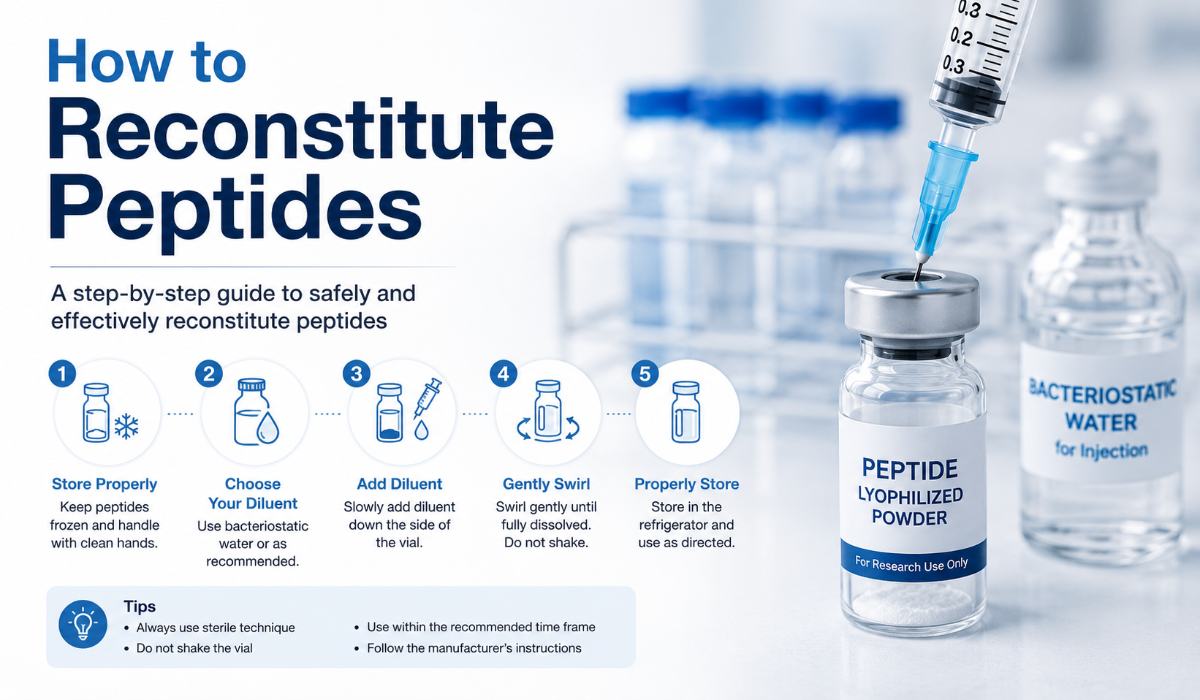
For researchers working with injectable peptide research protocols, our guide on how to reconstitute peptides provides detailed technical guidance on bacteriostatic water preparation, dosing calculations, and sterile technique.
Administration Route Comparison
| Parameter | Topical | Subcutaneous Injection |
|---|---|---|
| Bioavailability | ~1–10% (vehicle dependent) | ~80–95% |
| Onset | Days–weeks | Hours–days |
| Target tissue | Skin, scalp primarily | Systemic |
| Research evidence level | Human clinical trials | Primarily preclinical |
| Typical research concentration | 0.5–1% solutions | 0.5–2 mg/kg in animal models |
GHK-Cu Dosing Protocols in Research
Disclaimer: Dosing information presented here is compiled strictly from published preclinical and academic research. Ageless Vitality Peptides products are sold for research purposes only and are not intended for human use.
Preclinical Research Dosing Models
Animal model studies have explored GHK-Cu at the following ranges:
- Topical (in vitro/ex vivo): 10–100 µM concentrations in cell culture media
- Subcutaneous (rodent models): 1–5 mg/kg body weight, administered 1–2x daily
- Wound healing models: Local application at 1–10 µg/wound site
Reconstitution for Research
GHK-Cu is typically supplied as a lyophilized powder. Standard research reconstitution uses bacteriostatic water as the solvent, with concentrations determined by the intended application.
Example Research Calculation:
- 5 mg vial + 2.5 mL bacteriostatic water = 2 mg/mL solution
- For a 1 mg/kg dose in a 25g mouse = 0.0125 mg dose = ~6.25 µL injection volume
Research Cycle Patterns (From Literature)
| Protocol Type | Duration | Frequency | Notes |
|---|---|---|---|
| Skin repair model | 8–12 weeks | Daily topical application | Human clinical trial standard |
| Wound healing model | Until closure | Every 12–24 hours | Localized application |
| Systemic anti-aging (rodent) | 4–8 weeks | Daily or 5x/week SQ | Dose-dependent gene changes |
| Hair follicle model | 12 weeks | Daily scalp application | Preclinical only |
GHK-Cu vs Other Peptides: Comparison Table
Researchers often evaluate GHK-Cu in the context of the broader peptide landscape. Here’s how it compares to some of the most studied research peptides:
| Peptide | Primary Research Focus | Mechanism | Overlap With GHK-Cu |
|---|---|---|---|
| GHK-Cu | Anti-aging, skin, regeneration | Gene expression modulation, copper delivery | — |
| BPC-157 | Gut healing, tissue repair | GH receptor activation, angiogenesis | Wound healing, anti-inflammation |
| TB-500 | Muscle/tissue repair | Actin polymerization, cell migration | Tissue regeneration |
| Semax | Cognitive function, neuroprotection | BDNF upregulation, NGF activation | Neuroprotection |
| CJC-1295 / Ipamorelin | Growth hormone, body composition | GHRH/ghrelin receptor agonism | Anti-aging (different pathway) |
| Selank | Anxiety, immune modulation | Tufsin analogue, enkephalin system | Anti-inflammatory |
| Retatrutide | Metabolic health, fat loss | Triple GLP/GIP/glucagon agonism | Systemic inflammation reduction |
For a broader perspective on how peptides work together, the best peptides research guide provides an organized overview of the leading research compounds by category.
Side Effects & Safety Profile
GHK-Cu has one of the most favorable safety profiles in the peptide research literature, which is partly attributable to its endogenous nature it is a molecule the body already produces and recognizes.
From topical research:
- Most commonly reported observation: mild transient redness at application site (attributed to vascular activity from VEGF stimulation)
- No systemic adverse events reported in human topical studies at standard concentrations
- No evidence of carcinogenicity or mutagenicity in available in vitro models
From injectable research (preclinical):
- At supratherapeutic doses in animal models, mild injection site reactions have been noted
- No organ toxicity observed in standard preclinical safety panels
- No immunogenicity concerns identified (consistent with its endogenous structure)
Copper considerations: GHK-Cu delivers a small amount of bioavailable copper. In research contexts, the copper content at standard dosing falls well within established physiological ranges. Researchers with existing copper metabolism concerns (e.g., Wilson’s disease models) should account for this in their experimental design.
How to Stack GHK-Cu With Other Peptides in Research
Peptide stacking combining two or more compounds with complementary mechanisms is a common approach in research settings. GHK-Cu’s gene expression profile makes it a versatile candidate for several combination protocols:
GHK-Cu + BPC-157 (Regeneration Stack)
Both peptides promote tissue repair, but through distinct pathways. BPC-157 acts primarily through the growth hormone receptor and nitric oxide signaling, while GHK-Cu operates through copper-mediated gene modulation. In wound healing models, their combination has shown additive effects on tissue remodeling. Explore our detailed BPC-157 and TB-500 combination research guide for related context.
GHK-Cu + CJC-1295/Ipamorelin (Anti-Aging Stack)
CJC-1295 and Ipamorelin stimulate growth hormone secretion, which in turn stimulates IGF-1 production and systemic anabolic signaling. GHK-Cu complements this by improving the quality of skin and connective tissue the cosmetic and structural aspects of anti-aging. Read our CJC-1295/Ipamorelin research guide for more context.
GHK-Cu + Semax (Neuroprotective Stack)
For brain health research models, combining GHK-Cu’s NGF-upregulating and anti-inflammatory CNS effects with Semax’s well-documented BDNF enhancement creates a complementary dual-pathway neuroprotective model. See the Semax peptide benefits complete guide for Semax mechanism details.
GHK-Cu + TB-500 (Accelerated Recovery Stack)
TB-500’s primary mechanism Thymosin Beta-4 fragment’s ability to upregulate actin and promote cell migration works synergistically with GHK-Cu’s collagen remodeling activity. Together, they address both the structural (collagen matrix) and cellular mobility (actin cytoskeleton) aspects of tissue regeneration. Learn more about the TB-500 research profile.
Where to Find GHK-Cu for Research
For researchers sourcing high-purity GHK-Cu for laboratory and in vitro applications, peptide quality is a critical variable. Impurities, incorrect peptide sequences, or degraded stock significantly affect experimental outcomes.
When evaluating a GHK-Cu research supplier, look for:
- Certificate of Analysis (CoA) from an independent third-party lab
- HPLC purity ≥98%
- Mass spectrometry (MS) verification confirming correct molecular weight
- Lyophilized format for maximum shelf stability
- Bacteriostatic water compatibility confirmed in product documentation
You can explore the GHK-Cu research peptide from Ageless Vitality Peptides, supplied as a lyophilized powder for research reconstitution.
For researchers also working on body composition models, exploring our best peptides for fat loss guide alongside GHK-Cu’s systemic anti-inflammatory profile may offer relevant research directions, as chronic inflammation is strongly linked to adipose tissue dysregulation.
Key Facts & Research Milestones: GHK-Cu Timeline
| Year | Milestone |
|---|---|
| 1973 | Dr. Loren Pickart first isolates GHK from human plasma; identifies wound healing activity |
| 1985 | GHK-Cu’s copper-chelating structure fully characterized; shown to stimulate collagen synthesis |
| 1993 | First peer-reviewed evidence of GHK-Cu accelerating wound closure in animal models |
| 2001 | Human clinical trials confirm topical GHK-Cu improves skin density and reduces wrinkle depth |
| 2010 | Gene expression microarray studies reveal GHK-Cu modulates 1,000+ genes |
| 2015 | Updated microarray data shows >4,000 gene modulations; anti-cancer gene activity noted |
| 2018 | Landmark Biomolecules paper: GHK-Cu reverses gene expression patterns of aging lung tissue |
| 2022 | Expanded research into GHK-Cu neuroprotective mechanisms; NGF pathway confirmed in CNS models |
| 2025–2026 | Growing researcher interest in systemic injectable protocols and combination peptide stacks |
GHK-Cu in the Context of Broader Longevity Research
GHK-Cu does not exist in isolation within the peptide research landscape. Its unique position as a naturally occurring, endogenous gene modulator distinguishes it from synthetic peptides in an important way: it works with the body’s existing regulatory systems rather than overriding them.
This philosophical point matters for researchers designing longevity protocols. Unlike pharmacological interventions that target single receptors or pathways, GHK-Cu’s multi-gene modulation touches many of the hallmarks of aging simultaneously:
- Genomic instability (DNA repair gene upregulation)
- Epigenetic alterations (chromatin remodeling via altered transcription factor activity)
- Loss of proteostasis (chaperone and proteasome pathway modulation)
- Cellular senescence (anti-apoptotic and anti-senescence gene networks)
- Altered intercellular communication (anti-inflammatory cytokine modulation)
This positions GHK-Cu within what researchers increasingly call “multi-hallmark peptide therapy” a conceptual framework that prioritizes compounds acting across multiple aging mechanisms simultaneously.
For researchers interested in the broader landscape of growth hormone-adjacent anti-aging peptides, our Tesamorelin vs Sermorelin comparison provides a useful reference point for GH-axis interventions that complement GHK-Cu’s collagen- and tissue-repair activity.
Similarly, researchers working on muscle hypertrophy and body composition models may find our IGF-1 LR3 before and after research guide and best peptide for muscle growth resources complementary to GHK-Cu’s connective tissue regeneration profile.
Conclusion:
Fifty years after its initial discovery, GHK-Cu continues to generate compelling research interest for a straightforward reason: no other single peptide compound has demonstrated comparable breadth of biological activity at such low concentrations. Its ability to modulate thousands of genes, stimulate tissue regeneration, suppress chronic inflammation, and support skin, hair, and neural health through a naturally occurring mechanism makes it a unique tool in the peptide researcher’s toolkit.
From the copper peptide for skin research that has generated multiple positive human clinical trials, to emerging data on GHK-Cu injection protocols for systemic anti-aging applications, the compound represents a convergence of cosmeceutical, regenerative, and longevity science that is increasingly difficult to ignore.
For researchers building comprehensive peptide protocols, GHK-Cu’s complementary profile, including blends with BPC-157/TB-500, growth hormone secretagogues, and neuropeptides, positions it as a foundational element rather than a peripheral add-on.
Explore the GHK-Cu research peptide for your laboratory applications, and consult our full peptide sciences research guide for the broader scientific framework.
Frequently Asked Questions (FAQs)
What does GHK-Cu stand for?
GHK-Cu stands for glycyl-L-histidyl-L-lysine copper (II). “GHK” refers to the three amino acids in the tripeptide chain (Glycine-Histidine-Lysine), and “Cu” is the chemical symbol for copper. Together they form a stable copper-chelating peptide complex.
Is GHK-Cu the same as a copper peptide serum?
Not exactly. “Copper peptide serum” is a cosmeceutical marketing term that often includes GHK-Cu as the active ingredient. GHK-Cu is the specific peptide compound; copper peptide serums are commercial formulations that include GHK-Cu at varying concentrations, often combined with other actives. Research-grade GHK-Cu refers to the isolated, high-purity compound used in laboratory settings.
How does GHK-Cu anti-aging activity differ from retinol or vitamin C?
Retinol (Vitamin A) and vitamin C promote collagen synthesis indirectly retinol via retinoic acid receptor signaling, vitamin C as a co-factor in collagen cross-linking. GHK-Cu operates upstream: it modulates the gene expression networks that regulate collagen synthesis, breakdown, and organization. This means GHK-Cu doesn’t just add collagen it rebalances the entire collagen remodeling system, which more closely mimics youthful tissue biology.
What is GHK-Cu injection used for in research?
In research contexts, subcutaneous GHK-Cu injection is being explored for its systemic effects particularly its potential to deliver anti-inflammatory, tissue-regenerative, and gene-expression-modulating effects to tissues beyond the skin, including muscles, joints, internal organs, and the central nervous system. Injectable administration achieves significantly higher bioavailability than topical application.
How does GHK-Cu compare to BPC-157 for tissue repair research?
Both are regenerative peptides, but their mechanisms differ. BPC-157 primarily acts through growth hormone receptor pathways, nitric oxide signaling, and angiogenesis making it particularly studied for gut lining repair, tendon healing, and vascular regeneration. GHK-Cu operates through copper-mediated gene modulation, collagen remodeling, and antioxidant upregulation with a focus on extracellular matrix quality and skin/scar tissue architecture. Many researchers study them in combination for additive regenerative effects.
Does GHK-Cu help with hair loss research?
Preclinical research suggests GHK-Cu may support hair follicle health through multiple mechanisms, including stem cell activation, improved VEGF-driven blood supply, enlargement of follicle size, and possible 5-alpha reductase inhibition. These findings are from animal models and cell culture studies. Human clinical trials specifically for hair loss are limited, making this an active area of research.
⚠️ Research Use Only Disclaimer: All GHK-Cu products sold by Ageless Vitality Peptides are chemical reagents intended strictly for research purposes. They are not intended for human use and have not been evaluated by the FDA for diagnosing, treating, curing, or preventing any disease. Ageless Vitality Peptides is a chemical supplier not a compounding pharmacy. Please review our full Terms & Conditions before ordering.