Bacteriostatic Water Explained: A Research Primer
Whether you’re a researcher working with injectable compounds, a laboratory professional reconstituting lyophilized powders, or someone studying peptide science, one term keeps coming up: bacteriostatic water. Despite its critical role in research, many people are confused about what it is, how it differs from regular sterile water, and when to use each. This guide covers all of it from the basics of what is bacteriostatic water to the highly specific question of how much bacteriostatic water to mix with 10mg of semaglutide.
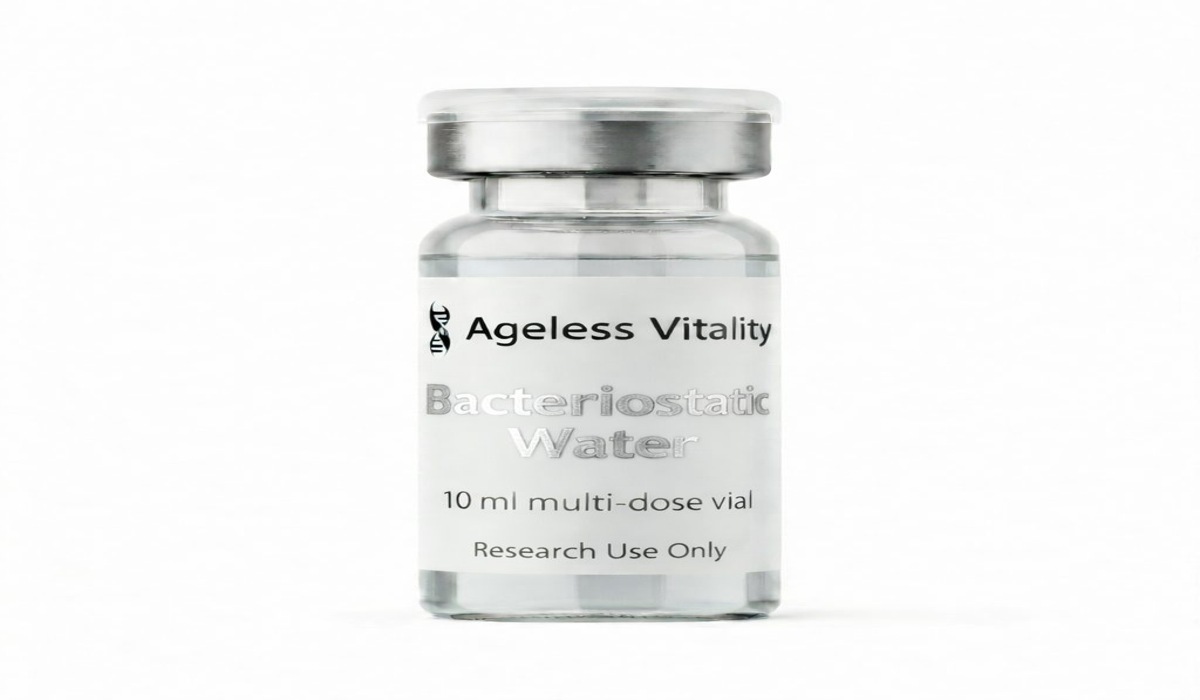
At Ageless Vitality Peptides, we supply 10ml vials of pharmaceutical-grade bacteriostatic water, specifically formulated for research purposes. This article will help you understand every aspect of this essential research solution, enabling you to make informed decisions for your laboratory work.
FDA DISCLAIMER: The statements made on this website have not been evaluated by the US Food and Drug Administration. The statements and products offered by Ageless Vitality Peptides are not intended to diagnose, treat, cure, or prevent any disease. Our products are chemical reagents intended for research purposes only and are not for human use. We do not sell to patients. Please review our Terms & Conditions before placing an order.
What Is Bacteriostatic Water?
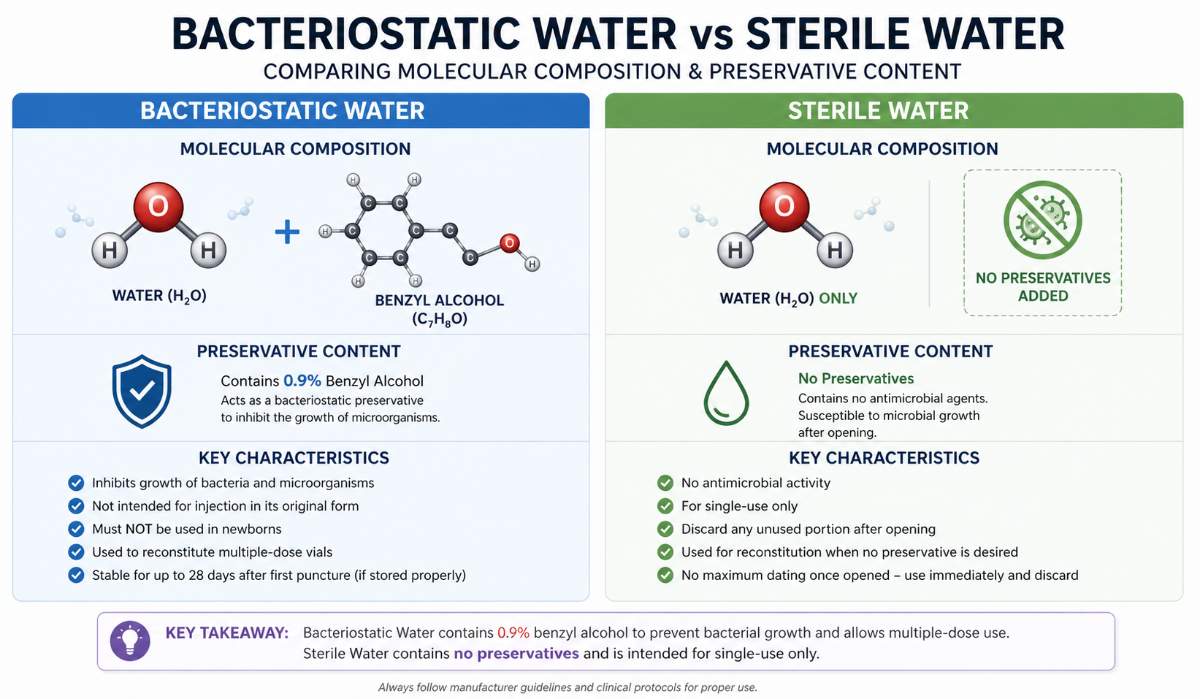
Bacteriostatic water is sterile water containing 0.9% benzyl alcohol as a preservative. The term ‘bacteriostatic’ refers to its ability to inhibit bacterial growth without necessarily killing existing bacteria. This is critically different from plain sterile water, which has no preservative and becomes susceptible to bacterial contamination after opening.
The 0.9% benzyl alcohol content serves a dual purpose: it prevents microbial proliferation and it extends the usable life of the vial after the first puncture. In a research setting, this means a single vial can be accessed multiple times over days or weeks without significant risk of contamination a distinct advantage when working with multi-dose peptide preparations.
Quick Facts: Bacteriostatic Water at a Glance
| Property | Bacteriostatic Water | Sterile Water for Injection |
|---|---|---|
| Preservative | 0.9% Benzyl Alcohol | None |
| Multi-dose use | Yes (up to 28 days after first use) | No (single use only) |
| Bacterial inhibition | Yes | No |
| pH | 4.5 – 7.0 | 5.0 – 7.0 |
| Common use | Reconstituting peptides, hormones | Single-dose injections |
| Shelf life (unopened) | 2+ years (varies by brand) | 2+ years (varies by brand) |
| Osmolality | ~0 mOsm/kg (hypotonic) | ~0 mOsm/kg (hypotonic) |
Bacteriostatic Water vs Sterile Water: Key Differences Explained
The debate around bacteriostatic water vs sterile water is common among researchers and laboratory professionals. Here’s what you need to know:
Preservation & Multi-Use Safety
Sterile water for injection (SWFI) is completely free of preservatives, bacteria, and pyrogens. It is designed for single-dose use only. Once the vial is punctured, it should be used immediately and discarded. Any multi-access usage creates serious contamination risk.
Bacteriostatic water, by contrast, is specifically formulated for multi-dose vials. Because benzyl alcohol inhibits bacterial growth, the solution remains stable and research-safe across multiple punctures. For researchers working with compounds like BPC-157 (5mg) or TB-500 (Thymosin Beta-4), which are typically used across multiple sessions, bacteriostatic water is the preferred reconstitution agent.
Solubility and pH Compatibility
Most lyophilized (freeze-dried) peptides are designed to be reconstituted with a slightly acidic diluent. Bacteriostatic water typically has a pH of 4.5-7.0, which is compatible with the vast majority of research peptides. This slightly acidic environment also aids peptide solubility and stability.
Sterile saline (0.9% NaCl solution) is another common diluent but is not ideal for all peptide applications, as the salt content can affect peptide stability. Pure distilled water is not appropriate for injection-based research applications at all.
Hospira Bacteriostatic Water: Industry Standard for Research
When researchers search for Hospira bacteriostatic water, they are typically referring to the Hospira/Pfizer brand of bacteriostatic water for injection one of the most widely recognized brands in pharmaceutical and research settings. Hospira has long been a trusted name in sterile injectables, and their bacteriostatic water meets United States Pharmacopeia (USP) standards.
However, Hospira bacteriostatic water is primarily sold through medical and pharmaceutical distributors and may not always be available to independent researchers without institutional accounts. This is why research-grade bacteriostatic water suppliers like Ageless Vitality Peptides serve as an important resource for the research community.
Key Research Facts About Bacteriostatic Water
•Benzyl alcohol concentration: 0.9% (9mg per mL)
•Effective bacteriostatic action for 28 days after initial vial puncture
•Compatible with the majority of research peptides including GH secretagogues and healing peptides
•Supplied in standard 10ml multi-dose vials for laboratory convenience
•Hypotonic solution — should not be used in large volumes intravenously in clinical contexts
•pH range: 4.5–7.0 depending on manufacturer and formulation
Bacteriostatic Water for Injection: Understanding USP Standards
The phrase bacteriostatic water for injection has a specific technical meaning. According to the United States Pharmacopeia (USP), sterile water containing one or more suitable antimicrobial agents most commonly benzyl alcohol at 0.9%. It is packaged in single-dose or multiple-dose containers of not more than 30 mL.
For research applications, bacteriostatic water for injection is the gold-standard diluent for reconstituting peptides, research hormones, and similar lyophilized compounds. Its controlled sterility and bacteriostatic properties make it the preferred choice among peptide researchers worldwide.
| Research Compound | Recommended Diluent | Typical Reconstitution Volume |
|---|---|---|
| Semaglutide 10mg | Bacteriostatic Water | 1–2 mL (researcher-determined) |
| BPC-157 5mg | Bacteriostatic Water | 1–2 mL |
| TB-500 5mg | Bacteriostatic Water | 1–2 mL |
| CJC-1295/Ipamorelin Blend 10mg | Bacteriostatic Water | 1–2 mL |
| NAD+ 500mg | Bacteriostatic Water | 2–5 mL |
| IGF-1 LR3 | Bacteriostatic Water with Acetic Acid | 1 mL |
Bacteriostatic Water for Peptides: Why It’s the Preferred Choice
Understanding why bacteriostatic water is specifically recommended for peptide research requires a look at peptide chemistry. Most research peptides are supplied as lyophilized powders white or off-white freeze-dried material in sealed vials. To use these compounds in research, they must be reconstituted (dissolved) into a liquid solution.
Bacteriostatic water is preferred for bacteriostatic water for peptides for several key reasons:
•Multi-dose preservation: Research protocols often require multiple measurements or injections from the same vial. Bacteriostatic water keeps reconstituted peptides stable across these sessions.
•pH compatibility: The slightly acidic pH of bacteriostatic water is compatible with most peptide structures and prevents premature degradation.
•Verified sterility: USP-grade bacteriostatic water is sterile at the point of manufacture, ensuring a clean reconstitution environment.
•Peptide stability: Benzyl alcohol does not react with most peptide bonds, making it a chemically neutral preservative from the peptide’s perspective.
For researchers studying peptide blends such as the BPC-157 + TB-500 Blend (10mg), bacteriostatic water is an ideal reconstitution solution that maintains the integrity of both peptides.

How Much Bacteriostatic Water to Mix With 10mg of Semaglutide
One of the most frequently searched questions in peptide research is: how much bacteriostatic water to mix with 10mg of semaglutide. This is an important calculation that affects the concentration and dosing accuracy of reconstituted semaglutide solutions.
In research, the reconstitution volume determines the concentration of the resulting solution. Here’s a reference table that researchers commonly use:
| Bacteriostatic Water Added | Semaglutide Amount | Resulting Concentration | Volume per 0.5 mg Research Dose |
|---|---|---|---|
| 1 mL | 10 mg | 10 mg/mL (10,000 mcg/mL) | 0.05 mL (50 µL) |
| 2 mL | 10 mg | 5 mg/mL (5,000 mcg/mL) | 0.1 mL (100 µL) |
| 5 mL | 10 mg | 2 mg/mL (2,000 mcg/mL) | 0.25 mL (250 µL) |
| 10 mL | 10 mg | 1 mg/mL (1,000 mcg/mL) | 0.5 mL (500 µL) |
Most researchers prefer to add 2mL of bacteriostatic water to 10mg of semaglutide, resulting in a 5mg/mL concentration. This middle-ground concentration allows for practical measurement volumes with a standard insulin syringe while keeping the solution manageable.
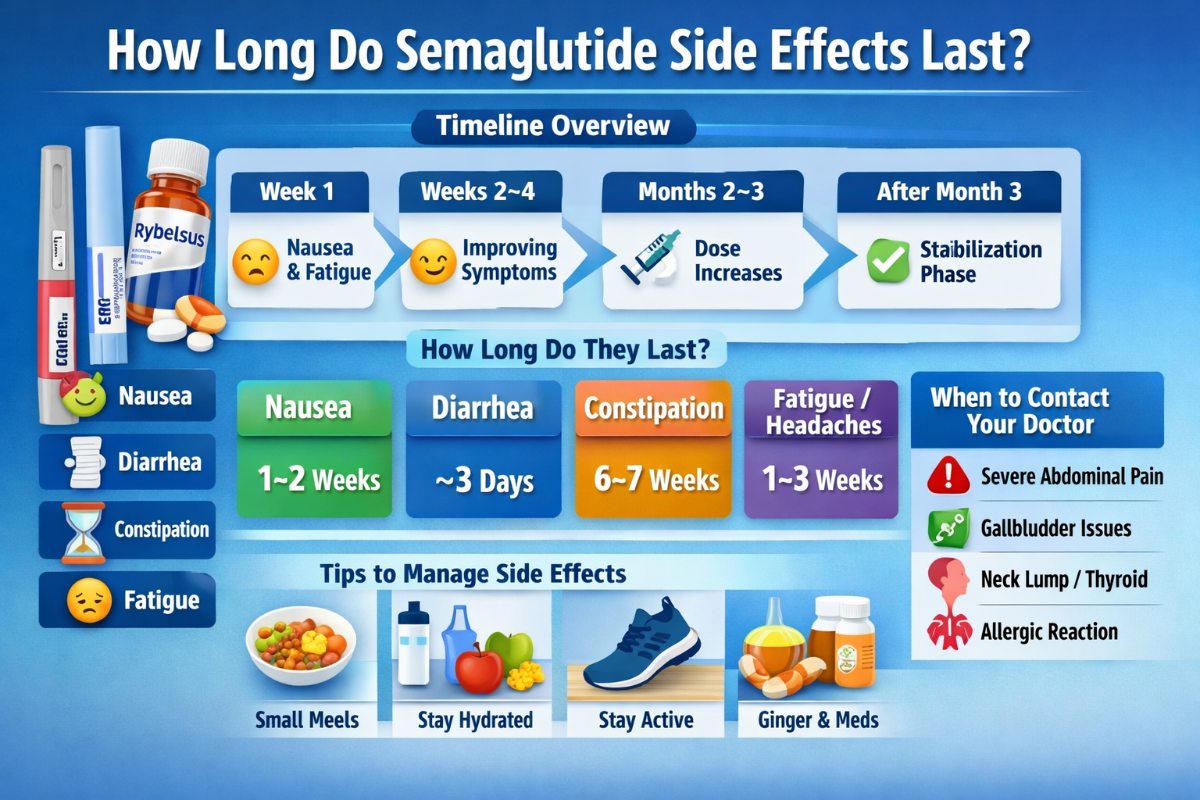
Important Note: Semaglutide is a GLP-1 receptor agonist peptide. All semaglutide products from Ageless Vitality Peptides are for research purposes only. For information about potential research effects, see our article on how long semaglutide side effects last.
Bacteriostatic Water 10ml: The Standard Research Vial
The 10ml vial size is the industry standard for research bacteriostatic water and for good reason. A 10ml vial of bacteriostatic water provides enough volume to reconstitute multiple peptide vials throughout a research cycle, while remaining compact and easy to handle in a laboratory setting.
The 10ml multi-dose format is practical for several reasons:
•Multiple reconstitutions: One vial can typically reconstitute 5–10 separate peptide compounds depending on volume used per reconstitution.
•Cost efficiency: Larger volumes per vial reduce per-mL cost compared to smaller sizes.
•Reduced waste: The 28-day post-puncture stability window means researchers can use the entire vial across a research protocol without waste.
•Standard compatibility: 10ml vials are universally compatible with standard research-grade crimped vial caps and rubber stoppers.
Where Can I Buy Bacteriostatic Water?
The question ‘where can I buy bacteriostatic water’ comes up frequently among researchers, and the answer depends on your intended use and location.
Bacteriostatic Water CVS and Pharmacy Options
Searches for bacteriostatic water CVS reflect a common expectation that this product might be available at retail pharmacies. In reality, bacteriostatic water for injection is classified as a pharmaceutical product and is generally available only with a prescription at retail pharmacies in the United States. Over-the-counter availability varies by state and jurisdiction.
Some compounding pharmacies may stock it, but availability is inconsistent and may require a prescription or practitioner affiliation.
Research-Grade Bacteriostatic Water from Ageless Vitality Peptides
For researchers and laboratory professionals, Ageless Vitality Peptides provides research-grade bacteriostatic water in 10ml vials, designed specifically for reconstituting research compounds. Our products are produced to strict quality standards and are intended for laboratory research use only, not for human administration.
Bacteriostatic Water and NAD+ Research: A Powerful Combination
One of the most exciting areas of current research involves nicotinamide adenine dinucleotide (NAD+) a coenzyme central to cellular energy metabolism. Our NAD+ 500mg research compound is supplied in lyophilized form and requires reconstitution with bacteriostatic water before use in research protocols.
NAD+ research is a rapidly expanding field, with studies investigating its role in:
•Cellular energy production and mitochondrial function
•DNA repair mechanisms
•Sirtuin enzyme activation (associated with longevity research)
•Neurological health and neuroprotection
•Metabolic regulation
When reconstituting NAD+ 500mg for research, bacteriostatic water is the recommended diluent. The typical approach is to add 2–5mL of bacteriostatic water, creating a workable concentration for measurement and administration in research subjects. The bacteriostatic properties of the water are particularly valuable for NAD+ research given the compound’s relatively high per-dose volumes.
Pairing Bacteriostatic Water With Other Research Peptides
Beyond semaglutide and NAD+, bacteriostatic water is the standard reconstitution solution for a wide range of research peptides. Here’s an overview of common research applications:
Growth Hormone Secretagogues
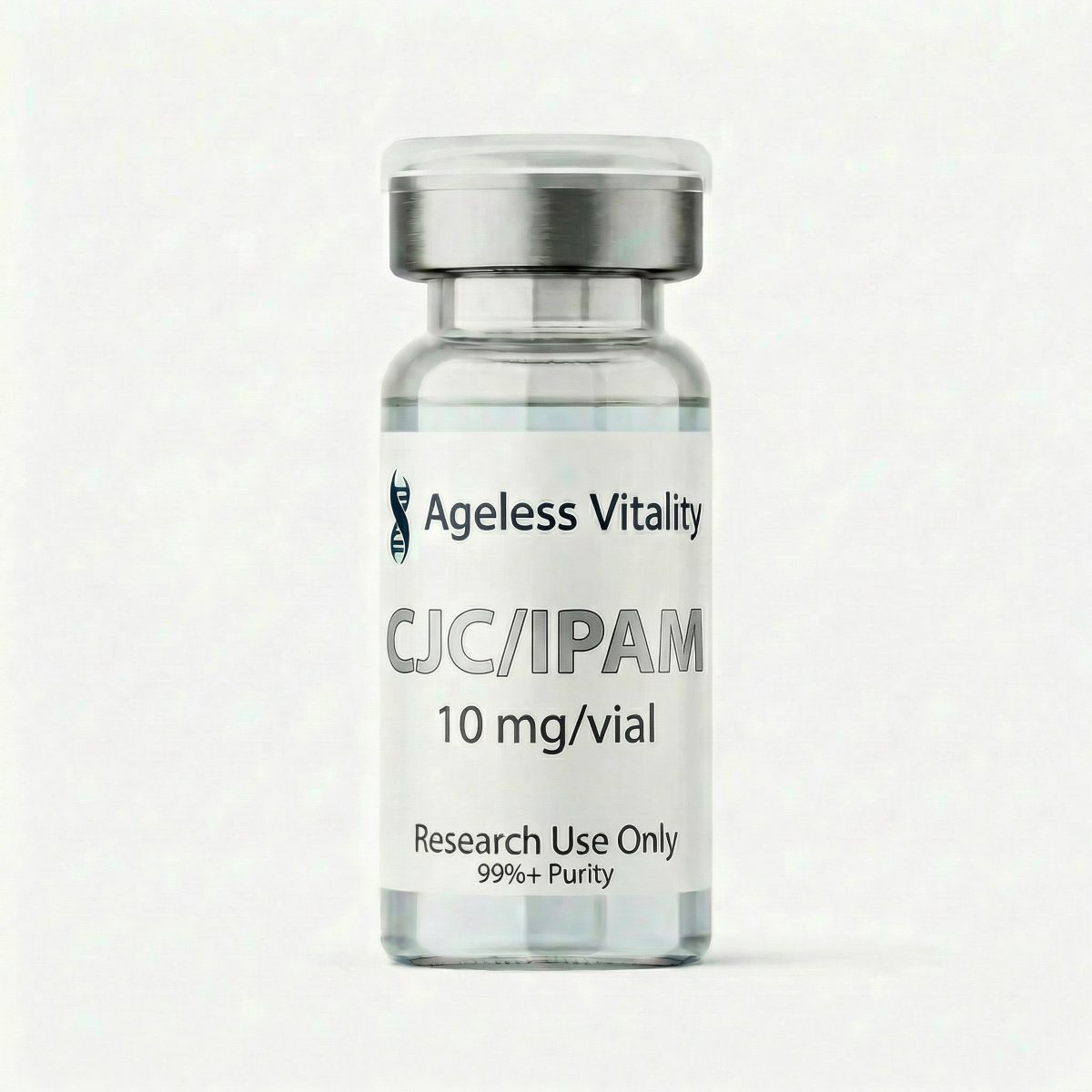
The CJC-1295 / Ipamorelin Blend (10mg) is a combined research peptide blend that stimulates growth hormone release through two separate mechanisms. CJC-1295 acts as a GHRH analog while Ipamorelin is a selective GH secretagogue. Both peptides are compatible with bacteriostatic water reconstitution, and the blend is typically reconstituted in 1–2mL for research purposes. For a comprehensive overview of this peptide combination, see our CJC-1295 Ipamorelin research guide.
Healing and Recovery Peptides
BPC-157 and TB-500 are among the most studied healing and recovery peptides in the research community. Our article on combined BPC-157 and TB-500 research covers their synergistic potential. Both peptides are supplied lyophilized and reconstituted with bacteriostatic water for research use.
Metabolic Research Peptides
For researchers exploring growth hormone regulation and body composition, our resource on Tesamorelin vs Sermorelin provides an in-depth comparison of two major GH-releasing factor analogs. Both are lyophilized peptides reconstituted with bacteriostatic water, and understanding their differences is essential for selecting the right compound for a given research protocol.
Researchers interested in IGF-1 LR3 can find comprehensive before-and-after research data in our IGF-1 LR3 before and after research overview. Note that IGF-1 LR3 is often reconstituted with acetic acid in bacteriostatic water for optimal solubility, unlike most other peptides.
Proper Reconstitution Protocol: Step-by-Step Research Guide
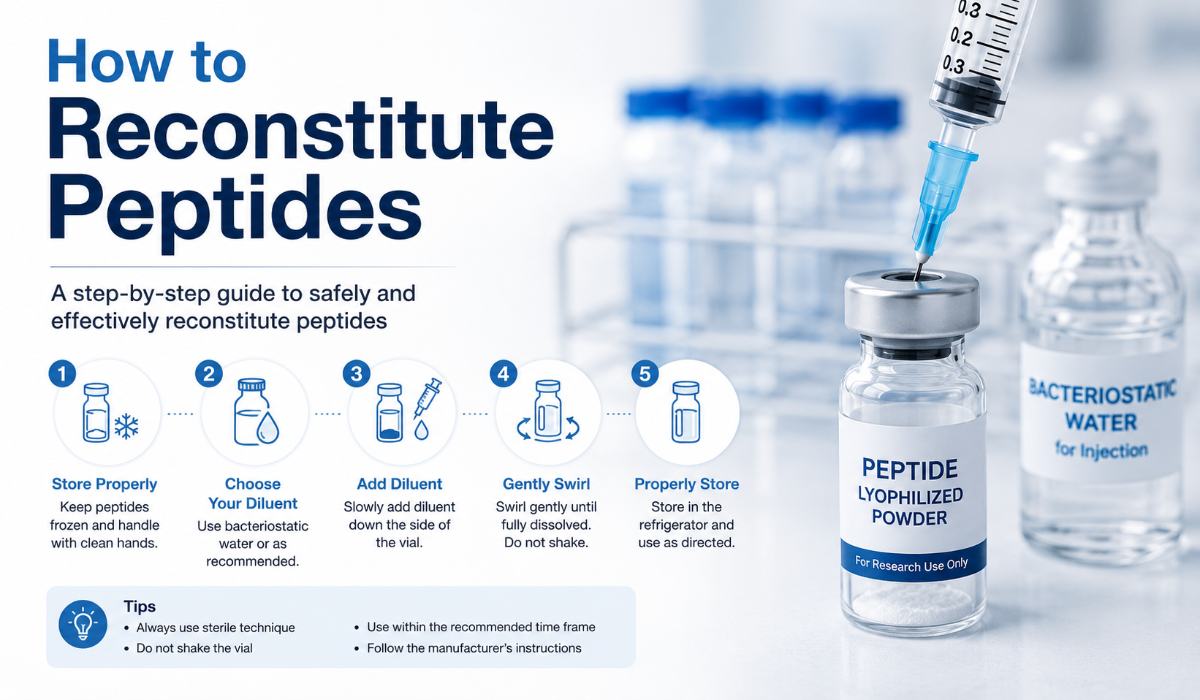
For researchers new to peptide reconstitution, following a consistent, sterile protocol is essential. Here is a general research protocol for reconstituting lyophilized peptides with bacteriostatic water:
•Prepare your workspace: Use a clean surface, ideally in a laminar flow hood or clean bench environment. Wear gloves.
•Gather materials: You will need the lyophilized peptide vial, bacteriostatic water 10ml, appropriate syringes, and alcohol wipes.
•Sterilize vial tops: Wipe the rubber stoppers of both the peptide vial and bacteriostatic water vial with 70% isopropyl alcohol. Allow to dry.
•Draw bacteriostatic water: Using a sterile syringe, draw the appropriate volume of bacteriostatic water (determined by your target concentration).
•Inject slowly: Insert the syringe needle through the rubber stopper of the peptide vial and inject the bacteriostatic water slowly against the glass wall do not inject directly onto the powder.
•Swirl gently: After injecting, gently swirl the vial. Do not shake vigorously as this can degrade peptide structure.
•Verify dissolution: The resulting solution should be clear and colorless. Cloudiness or particulate matter may indicate degradation or contamination.
•Store correctly: Reconstituted peptides stored in bacteriostatic water should be refrigerated (2–8°C) and used within the bacteriostatic water’s active window (typically 28 days post-puncture).
RESEARCH NOTICE: All reconstitution protocols described above are for research use only. These compounds are not approved for human use. Ageless Vitality Peptides is a chemical reagent supplier, not a pharmacy or medical provider.
Storage and Staility: Maximizing the Shelf Life of Bacteriostatic Water
Proper storage of bacteriostatic water both unopened and after puncture is critical to maintaining its sterility and effectiveness as a research diluent.
Unopened Vials
Unopened bacteriostatic water vials should be stored at controlled room temperature (20–25°C / 68–77°F), protected from light and freezing. Most manufacturers list a shelf life of 2–3 years from the manufacture date when stored correctly.
After First Puncture
Once the rubber stopper has been punctured, the 28-day rule applies. The benzyl alcohol continues to inhibit bacterial growth during this window, but sterility cannot be guaranteed indefinitely. Researchers should:
•Label the vial with the date of first puncture
•Refrigerate at 2–8°C after opening
•Inspect the solution before each use — discard if cloudy or discolored
•Never use beyond 28 days post-puncture
Conclusion:
Whether you’re reconstituting semaglutide for metabolic research, preparing BPC-157 and TB-500 for tissue repair studies, or working with NAD+ for cellular energy investigations, bacteriostatic water is the essential foundation of your reconstitution workflow. Its combination of sterility, pH compatibility, benzyl alcohol preservation, and multi-dose stability make it the undisputed standard for research-grade peptide work.
At Ageless Vitality Peptides, we are committed to supplying the research community with high-quality, research-grade bacteriostatic water and peptide compounds. Explore our complete range of research peptides and compounds, and pair your bacteriostatic water with compounds like CJC-1295/Ipamorelin, BPC-157, or NAD+ 500mg to build a complete research protocol.
Frequently Asked Questions (FAQs)
What is bacteriostatic water and how is it different from regular water?
Bacteriostatic water is sterile water for injection that contains 0.9% benzyl alcohol as a preservative. Regular water even distilled water is not sterile and is not suitable for injection or research reconstitution. Bacteriostatic water undergoes pharmaceutical-grade sterilization and testing to ensure it meets USP standards.
Can I use sterile water instead of bacteriostatic water for peptides?
Sterile water for injection can be used for single-dose reconstitutions, but it lacks the bacteriostatic preservation that allows multi-dose use. For research protocols that require multiple accesses to a vial, bacteriostatic water is strongly preferred. Using sterile water in a multi-dose scenario significantly increases the risk of contamination.
Is bacteriostatic water available at CVS or other pharmacies?
Bacteriostatic water CVS availability is limited. Most retail pharmacies in the United States carry bacteriostatic water only with a valid prescription, and stock is not always consistent. For research purposes, research-grade suppliers like Ageless Vitality Peptides are the most reliable sources of bacteriostatic water in 10ml vials.
How much bacteriostatic water should I use to reconstitute 10mg of semaglutide?
The reconstitution volume determines the final concentration. Most researchers use 2mL of bacteriostatic water with 10mg of semaglutide, producing a 5mg/mL concentration. Some researchers prefer 1mL (10mg/mL, more concentrated) or larger volumes for more dilute preparations. Always refer to your specific research protocol for guidance.
What is the shelf life of bacteriostatic water after opening?
After the first puncture, bacteriostatic water remains viable for research use for up to 28 days when stored correctly (refrigerated at 2–8°C). The benzyl alcohol preservative actively inhibits bacterial growth during this window. Always label vials with the date of first puncture.
Is Hospira bacteriostatic water the best option for research?
Hospira (now a Pfizer company) produces pharmaceutical-grade bacteriostatic water that meets USP standards. However, research-grade bacteriostatic water that meets equivalent quality standards such as that offered by Ageless Vitality Peptides is equally suitable for laboratory research applications and is more readily accessible to independent researchers.
Can bacteriostatic water be used with NAD+?
Yes, NAD+ 500mg is a lyophilized compound that is typically reconstituted with bacteriostatic water for research use. The typical reconstitution volume for NAD+ 500mg is 2–5mL of bacteriostatic water, depending on the target concentration for the specific research protocol.
What’s the difference between bacteriostatic and bactericidal?
Bacteriostatic means the substance inhibits or slows bacterial growth it prevents bacteria from multiplying but does not necessarily kill existing bacteria. Bactericidal means the substance actively kills bacteria. Benzyl alcohol at 0.9% concentration is bacteriostatic rather than bactericidal, which is sufficient to maintain sterility in a sealed vial environment during the research window.