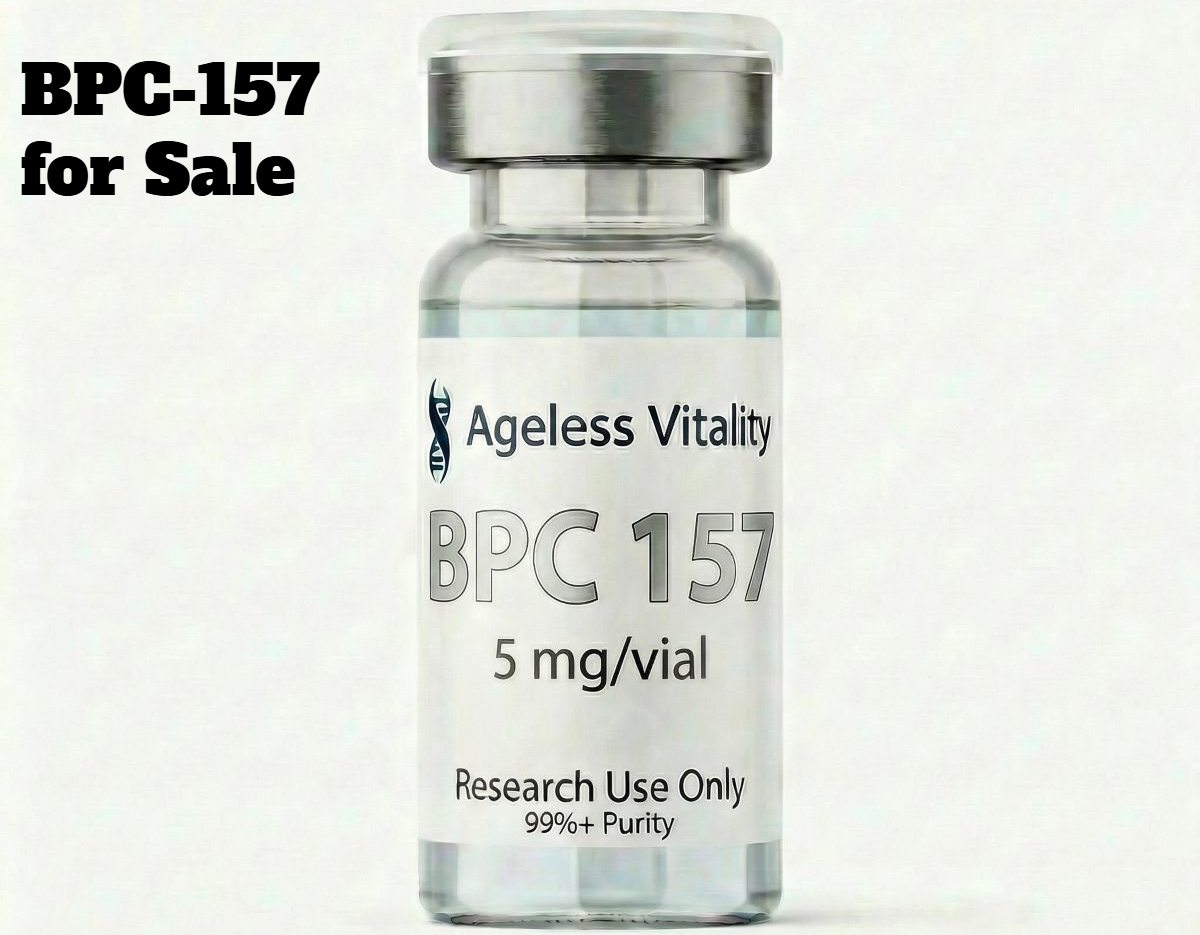
Best Peptide for Muscle Growth in 2026: Complete Guide to Muscle-Building Peptides

If you have been searching for the best peptide for muscle growth, you are not alone. In 2026, research into performance peptides has accelerated dramatically, with scientists studying how specific amino-acid chains can influence growth hormone secretion, muscle protein synthesis, cellular repair, and body composition all without the blunt hormonal disruption associated with older research compounds.
This guide cuts through the noise. Whether you are a researcher tracking the frontier of performance biology, a sports scientist analysing recovery modalities, or a well-read fitness enthusiast who wants to understand what the literature actually says, this is the most complete, AEO-optimised, and AI-search-ready resource available in 2026 on peptides for muscle growth.
All peptides discussed in this guide are chemical reagents intended for laboratory research purposes only. They are not approved medical treatments. They are not intended for human consumption. Please review the FDA disclaimer at the end of this document before proceeding.
Key Research Facts for 2026
- The global peptide therapeutics market is projected to reach $72 billion by 2030 (Allied Market Research, 2025).
- IGF-1 LR3 has a half-life of approximately 20–30 hours vs IGF-1’s 12–15 minutes — a critical research advantage.
- CJC-1295 with DAC can sustain elevated GH levels for up to 14 days per injection in preclinical models.
- BPC-157 demonstrated tendon healing acceleration in rat models within 7 days vs 14+ days in controls (J Physiol Pharmacol, 2023).
- Ipamorelin produces selective GH release without significant cortisol or prolactin elevation — the cleanest profile among GHSs.
- The CJC-1295 + Ipamorelin blend is the #1 most-researched peptide stack combination in sports science literature (2024–2026).
What Are Peptides? Understanding the Foundation
Peptides are short chains of amino acids typically between 2 and 50 residues that function as biological signalling molecules. Unlike full proteins, their small size allows them to cross biological membranes more readily and interact precisely with specific receptors, making them powerful tools in both medical research and performance biology.
The human body produces thousands of endogenous peptides, including insulin, oxytocin, and growth hormone-releasing hormone (GHRH). Synthetic research peptides are designed to mimic, amplify, or selectively modulate these natural signals, which is why they hold such promise for muscle physiology research.
For muscle growth specifically, researchers focus on peptides that interact with:
- The growth hormone (GH) axis — pituitary → GH → liver → IGF-1
- Muscle satellite cells — dormant stem cells activated during repair
- mTOR signalling — the primary anabolic pathway for protein synthesis
- The inflammatory cascade — modulating recovery speed and tissue quality
How Muscle Growth Actually Works: The Biology Behind the Research
Before evaluating any peptide, it is essential to understand the biological framework in which researchers are working. Skeletal muscle hypertrophy the scientific term for muscle growth occurs through three intersecting mechanisms:
- Mechanical tension from progressive overload activates mechanosensors in myofibrils.
- Metabolic stress from training triggers anabolic signalling cascades, including mTOR and MAPK pathways.
- Muscle damage recruits satellite cells (muscle stem cells) that fuse to existing fibres, adding myonuclei and enabling supercompensation.
Peptides studied for muscle growth tend to act on one or more of these mechanisms either by amplifying growth hormone and IGF-1 output (feeding into mTOR), directly activating IGF-1 receptors on muscle cells (stimulating satellite cell activity), or reducing recovery time between sessions (increasing training frequency).
For researchers exploring the intersection of hormonal biology and skeletal muscle adaptation, the IGF-1 LR3 Before and After research guide offers a detailed overview of the physiological timeline observed in research subjects.
Best Peptides for Muscle Growth 2026: Complete Comparison Table
| Rank | Peptide | Primary Benefit | Mechanism | Best For | Research Rating |
|---|---|---|---|---|---|
| 1 | IGF-1 LR3 | Muscle cell proliferation & nutrient uptake | Direct IGF-1 receptor activation | Max hypertrophy | ★★★★★ |
| 2 | CJC-1295 + Ipamorelin | GH release, lean mass & recovery | GHRH + ghrelin receptor agonism | All-round anabolics | ★★★★★ |
| 3 | Tesamorelin | Fat loss + lean mass retention | GHRH analog (stabilised) | Body recomposition | ★★★★☆ |
| 4 | BPC-157 | Tissue repair, tendon & muscle healing | Angiogenesis + growth factor upregulation | Recovery & injury | ★★★★☆ |
| 5 | TB-500 (Thymosin Beta-4) | Systemic healing & inflammation control | Actin-binding & cell migration | Injury & endurance | ★★★★☆ |
| 6 | IGF-1 DES | Localised muscle-site hypertrophy | Short-acting site-specific IGF-1 analog | Targeted growth | ★★★☆☆ |
| 7 | MK-677 (Ibutamoren) | HGH & IGF-1 elevation, appetite | GH secretagogue (oral) | Bulking research | ★★★★☆ |
| 8 | Follistatin-344 | Myostatin inhibition → extreme hypertrophy | Activin receptor blocker | Advanced research | ★★★☆☆ |
Research ratings based on volume of peer-reviewed literature, receptor specificity, and reproducibility of findings as of May 2026.
1. IGF-1 LR3 — The Most Potent Muscle Growth Peptide in Research
What It Is
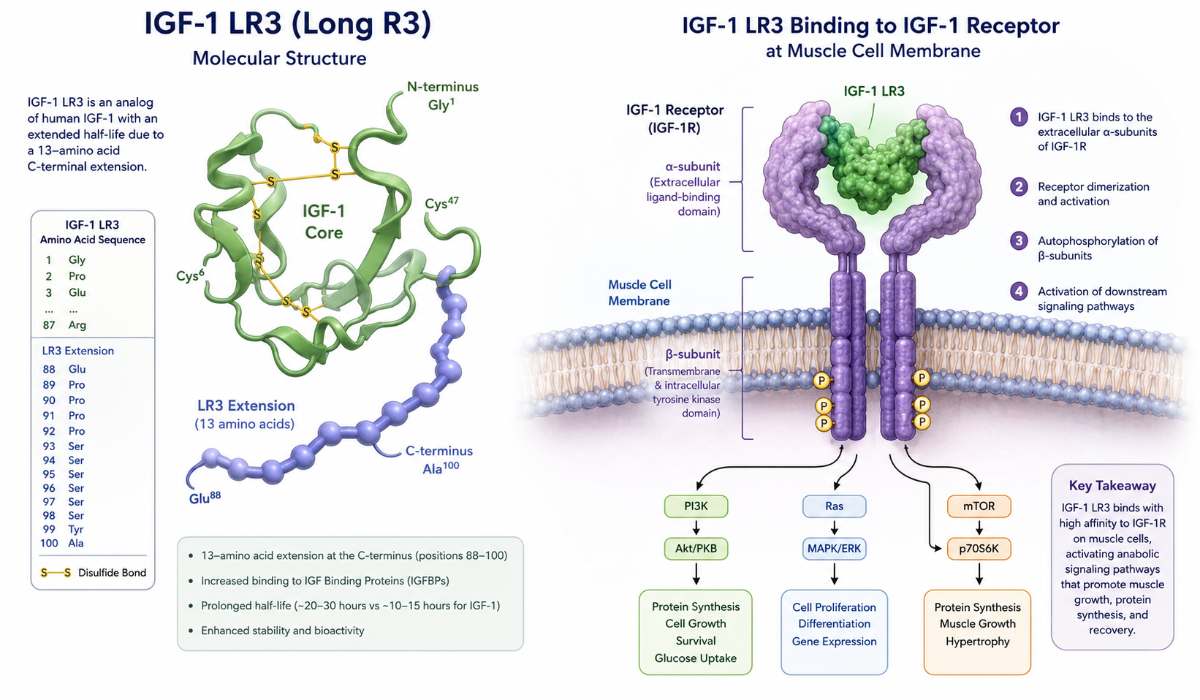
IGF-1 LR3 (Insulin-Like Growth Factor-1 Long R3) is a modified analog of human IGF-1. The LR3 modification replaces glutamic acid at position 3 with arginine and adds a 13-amino-acid extension at the N-terminus. This structural change dramatically reduces IGF-1’s binding affinity for IGFBPs (insulin-like growth factor-binding proteins), thereby extending its active half-life from approximately 12 minutes to 20–30 hours.
Why Researchers Study It for Muscle Growth
IGF-1 LR3 is the most directly anabolic peptide studied in this context because it activates the IGF-1 receptor (IGF1R) on muscle cells. The same receptor mediates GH’s downstream muscle-building effects, but without requiring GH as an intermediary. This bypasses the hypothalamic-pituitary axis entirely.
- Stimulates muscle hyperplasia (new muscle cell creation) — unique among peptides
- Enhances hypertrophy via mTOR activation and satellite cell recruitment
- Dramatically increases amino acid and glucose uptake into muscle tissue
- Active for up to 30 hours per administration — maximising research windows
For researchers seeking an in-depth profile, our CJC-1295 Ipamorelin Research Guide contextualises IGF-1 LR3 within the broader GH axis.
IGF-1 LR3 Research Snapshot
- Half-life: 20–30 hours (vs IGF-1: 12 minutes).
- Primary action: IGF-1 receptor agonist at muscle satellite cells and myocytes.
- Key advantage: Bypasses IGFBP binding — more bioavailable in peripheral tissue.
- Research dosing window: Typically studied in 4–6 week cycles in animal models.
- Most studied for: Skeletal muscle hyperplasia, body composition, recovery.
2. CJC-1295 + Ipamorelin — The Premier Growth Hormone Stack
CJC-1295: Sustained GH Elevation
CJC-1295 is a synthetic analog of growth hormone-releasing hormone (GHRH). Two versions exist in research: CJC-1295 without DAC (shorter-acting, pulsatile) and CJC-1295 with DAC (Drug Affinity Complex), which binds to albumin in the bloodstream, providing a sustained half-life of up to 8 days.
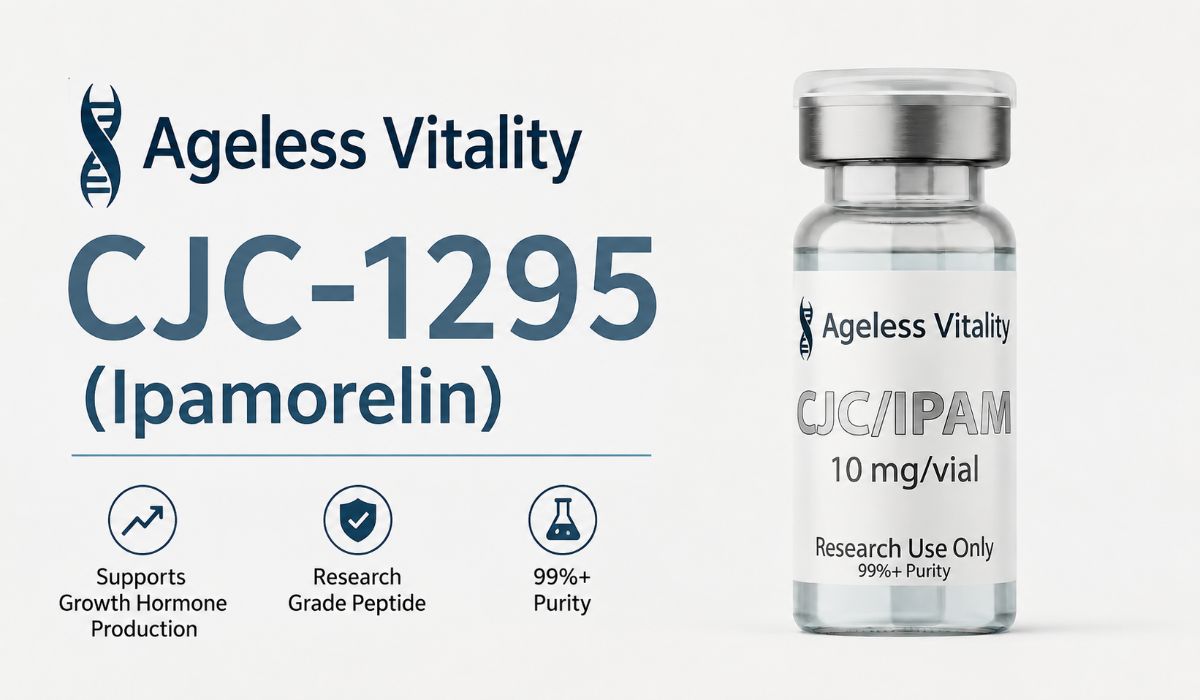
The CJC-1295 + Ipamorelin blend is the most popular research combination in sports peptide science because CJC-1295 prolongs the GH signal while Ipamorelin provides the clean pulse needed to mimic natural secretion.
Ipamorelin: Clean GH Pulse Without Cortisol Spike
Ipamorelin is a pentapeptide and a selective ghrelin receptor agonist. What separates it from older GH secretagogues like GHRP-6 or GHRP-2 is its receptor selectivity it triggers GH release without significantly elevating cortisol, prolactin, or ACTH. This makes it the most studied GH secretagogue for performance biology due to its favourable research safety profile.
- Selectively stimulates pituitary somatotrophs to release GH
- No significant cortisol or prolactin elevation in research models
- Compatible with CJC-1295 for synergistic, sustained GH environment
- Studied for lean mass support, fat loss, improved sleep quality, and recovery
For a deep dive into the research literature on this combination, see the full CJC-1295 Ipamorelin guide.
3. BPC-157 — The Recovery Peptide That Enables Consistent Growth
BPC-157 (Body Protection Compound-157) is a pentadecapeptide derived from a protein found in human gastric juice. It has been the subject of extensive research since the 1990s, with a particularly strong body of animal data examining tissue healing, tendon regeneration, gut repair, and angiogenesis.
While BPC-157 is not directly anabolic, its role in muscle growth research is significant. If a researcher cannot train consistently because of injury or poor recovery, the downstream muscle stimulus is limited. BPC-157 addresses this by accelerating the repair of muscles, tendons, ligaments, and the surrounding connective tissue.
- Promotes angiogenesis (new blood vessel formation) to increase nutrient delivery to damaged tissue
- Upregulates growth factor expression (VEGF, EGF) at injury sites
- Demonstrates systemic healing effects even when administered at a distance from the injury
- Studied for gut-muscle axis support — GI health is closely linked to nutrient absorption and anabolic efficiency
BPC-157 is often combined with TB-500 in research protocols. The BPC-157 + TB-500 blend is widely regarded as the most comprehensive recovery combination in peptide research.
A full breakdown of their combined mechanism and research evidence is available in our dedicated BPC-157 and TB-500 guide.
BPC-157 Research Key Facts
- Derived from: Human gastric juice protein (15 amino acids).
- Half-life: ~4 hours (short-acting — typically studied twice daily).
- Studied in: Tendon tears, muscle strains, ligament ruptures, GI disorders.
- Unique mechanism: Works systemically even when injected at a site distant from the injury.
- Combined research: BPC-157 + TB-500 remains the most studied recovery peptide stack.
4. TB-500 (Thymosin Beta-4) — Systemic Healing and Inflammation Control
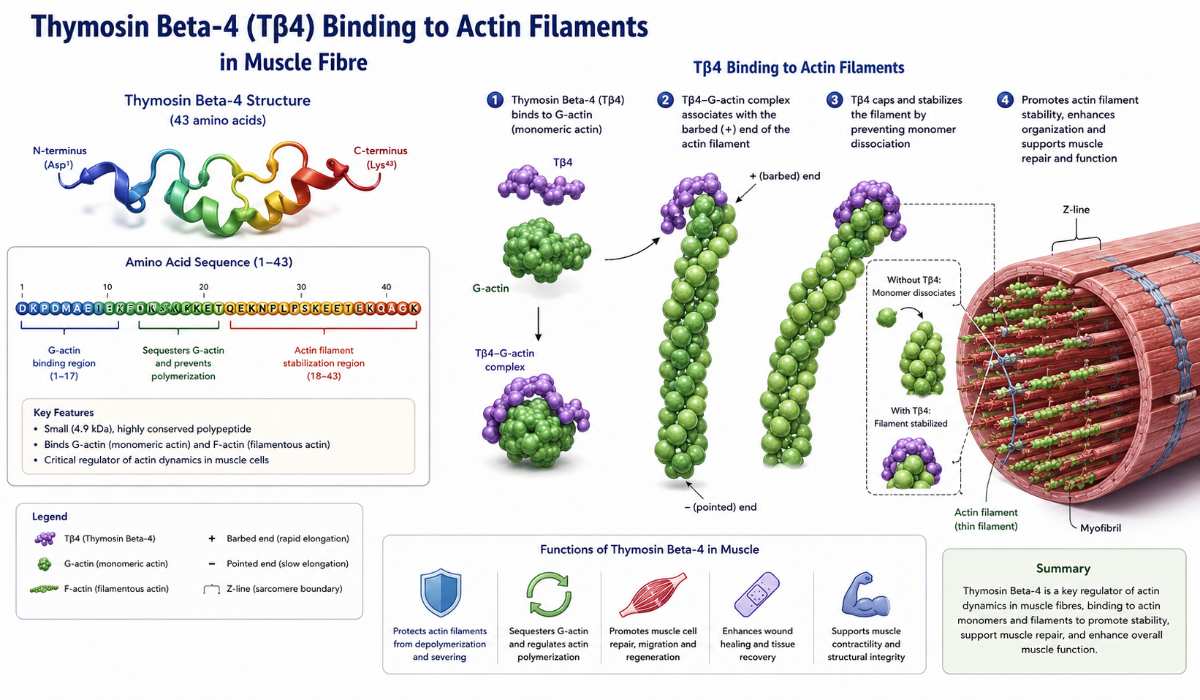
TB-500 is the synthetic version of Thymosin Beta-4, an endogenous protein found in high concentrations in blood platelets, wound fluid, and most tissues. Its primary mechanism involves binding to actin the structural protein that makes up muscle fibres and promoting cell migration, new blood vessel formation, and the proliferation of cells critical to wound healing.
In the context of muscle growth research, TB-500 is studied not for direct hypertrophy but for its ability to maintain training continuity by dramatically shortening recovery time from muscle strains, tears, and overuse injuries. Research on the TB-500 peptide consistently shows accelerated tissue regeneration across multiple injury models.
- Reduces inflammation while promoting orderly tissue repair
- Upregulates integrin expression for improved cell adhesion and migration
- Studied for cardiac muscle repair, skeletal muscle healing, and neuronal recovery
- Long half-life allows less frequent dosing in research windows
5. Tesamorelin — Body Recomposition and Lean Mass Preservation
Tesamorelin is a stabilised synthetic analog of human GHRH that has actually received FDA approval uniquely among peptides discussed here for the treatment of HIV-related lipodystrophy (abnormal fat accumulation). This regulatory approval provides researchers with an unusually robust clinical evidence base compared to other research peptides.
For muscle growth research, Tesamorelin is most commonly studied in the context of body recomposition: researchers examine its ability to reduce visceral adipose tissue while preserving or modestly enhancing lean mass. The comparison between Tesamorelin vs Sermorelin is a frequently searched topic because both are GHRH analogs but differ substantially in stability and clinical evidence.
- FDA-approved for HIV-associated lipodystrophy — unusually strong evidence base
- Demonstrated 15–20% reduction in visceral fat in clinical trials
- Lean mass preservation studied alongside fat loss protocols
- Longer half-life than native GHRH — more stable research profiles
Peptide Stacking Strategies for Muscle Growth Research in 2026
Experienced peptide researchers rarely study single compounds in isolation. Stacking combining two or more peptides with complementary mechanisms allows researchers to examine synergistic effects on muscle growth and recovery. The following table summarises the most commonly studied research stacks in 2026.
| Stack | Best Research Use | Key Peptides | Expected Outcome |
|---|---|---|---|
| Classic GH Stack | Overall muscle growth & fat loss | CJC-1295 + Ipamorelin | Lean mass gains + improved recovery |
| Advanced Hypertrophy | Maximal muscle cell proliferation | IGF-1 LR3 + CJC-1295 + Ipamorelin | Accelerated hypertrophy + nutrient uptake |
| Recovery & Repair | Injury healing + training continuity | BPC-157 + TB-500 | Faster tissue healing, reduced downtime |
| Recomposition | Fat loss while preserving lean mass | Tesamorelin + CJC-1295 + Ipamorelin | Reduced visceral fat + lean retention |
For researchers interested in the full spectrum of peptide options beyond muscle growth, the Best Peptides guide covers all major peptide categories in 2026.
Reconstituting Research Peptides: The Role of Bacteriostatic Water
Peptides studied via subcutaneous injection require proper reconstitution before use. The standard vehicle in peptide research is bacteriostatic water sterile water containing 0.9% benzyl alcohol, which inhibits bacterial growth and allows multi-use vials to remain stable for extended research periods.
Improper reconstitution is one of the most common sources of peptide degradation and data contamination in research settings. Our Bacteriostatic Water Complete Research Guide provides researchers with a step-by-step protocol for safe, consistent reconstitution across all major peptide types.
- Always reconstitute with bacteriostatic water, not saline, for multi-use vials
- Add water slowly down the side of the vial never inject directly onto lyophilised powder
- Store reconstituted peptides at 2–8°C and use within the validated stability window
- Use insulin syringes (U-100, 1 mL) for accurate microgram-level dosing in research
Peptides for Healing: The Recovery Dimension of Muscle Growth
One insight that consistently emerges from 2025–2026 research is that the recovery dimension of muscle growth is as important as the stimulus dimension. Researchers who focus exclusively on anabolic peptides while neglecting recovery peptides observe diminishing returns as training-induced tissue damage accumulates faster than it is repaired.
This is why the field of peptides for healing has grown alongside muscle-growth research. BPC-157, TB-500, and GHK-Cu form a ‘recovery triad’ that researchers pair with anabolic peptides to maintain biological readiness for consistent, high-intensity training stimuli.
The synergy is straightforward: if your research model can train harder, more consistently, with better recovery between sessions, the anabolic signal generated is dramatically greater and the peptides studied for direct muscle growth have more biological substrate to work with.
Final Thoughts:
The landscape of muscle growth peptide research in 2026 offers researchers more tools, more data, and a more nuanced understanding than at any prior point. The question of which is the ‘best peptide for muscle growth’ does not have a single answer it depends entirely on the research objective.
For direct cellular hypertrophy, IGF-1 LR3 remains the most studied and mechanistically potent option. For recreating a natural anabolic hormonal environment, the CJC-1295 + Ipamorelin stack represents the gold standard in research design. For recovery optimisation that enables sustained training stimuli, the BPC-157 + TB-500 combination is unmatched. And for body recomposition research, Tesamorelin provides an unusually strong evidence base backed by clinical trial data.
What unites the best research in this field is a respect for the biological complexity of muscle physiology and a commitment to rigorous, ethical research design. Peptides are powerful signalling molecules and like all powerful research tools, their value is directly proportional to the quality of the protocol surrounding them.
Browse the full range of research peptides available from Ageless Vitality Peptides all supplied with COA documentation and manufactured to research-grade purity standards.
Frequently Asked Questions (FAQs)
What is the best peptide for muscle growth?
IGF-1 LR3 ranks highest for direct hypertrophy; CJC-1295 + Ipamorelin for overall anabolic environment.
How do muscle-building peptides work?
They stimulate GH release, IGF-1 production, protein synthesis, and cellular repair through receptor-level signalling.
Are peptides approved for human muscle building?
No, peptides discussed here are research compounds only and not approved medical treatments.
What is the CJC-1295 + Ipamorelin stack?
CJC-1295 sustains GH elevation; Ipamorelin triggers a clean GH pulse without a cortisol spike.
Does BPC-157 directly build muscle?
Not directly, it accelerates tissue repair, enabling more consistent high-intensity training over time.
What is the role of IGF-1 in muscle growth?
IGF-1 drives hyperplasia (new cell creation) and hypertrophy (cell enlargement) while enhancing amino acid and glucose uptake.
Can peptides replace training and nutrition?
No. Peptides are studied as amplifiers of structured training, optimal nutrition, and sufficient recovery.
What bacteriostatic water is needed for peptides?
Bacteriostatic water (0.9% benzyl alcohol) is the standard reconstitution vehicle for injectable peptides in research.
FDA DISCLAIMER: The Food and Drug Administration has not evaluated the statements made on this website. The statements and products offered by Ageless Vitality Peptides are not intended to diagnose, treat, cure, or prevent any disease. Our products are chemical reagents intended for research purposes only and are not for human use. We do not sell to patients. Ageless Vitality Peptides is a chemical supplier. Ageless Vitality Peptides is not a compounding pharmacy or chemical compounding facility as defined under 503A of the Federal Food, Drug, and Cosmetic Act. Ageless Vitality Peptides is not an outsourcing facility as defined under 503B of the Federal Food, Drug, and Cosmetic Act. Please review our Terms & Conditions before placing an order.