Tesamorelin vs Sermorelin: Full Comparison 2026

If you’re researching growth hormone-releasing peptides in 2026, the Tesamorelin vs Sermorelin debate sits at the center of nearly every GHRH protocol discussion. Both peptides are growth hormone secretagogues compounds that prompt the pituitary gland to produce more natural growth hormone (GH). Yet their molecular structure, clinical backing, fat-reduction potency, and long-term research profiles are markedly different.
This guide delivers a rigorous, data-driven breakdown for researchers and clinicians who need to understand exactly how each peptide works, what the latest clinical evidence shows, and how to match the right compound to specific research objectives. Whether your focus is visceral fat metabolism, IGF-1 signaling, endocrine recovery, or longevity pathways, this comparison covers everything you need to know.
All peptides discussed in this article are intended strictly for in vitro laboratory research purposes only. They are not approved for human or animal use. Products available at Ageless Vitality Peptides are sold as chemical reagents for research and development only. FDA Disclaimer: These statements have not been evaluated by the FDA and are not intended to diagnose, treat, cure, or prevent any disease.
Fast Facts: Tesamorelin vs Sermorelin: Complete 2026 Research Comparison Guide at a Glance
| Tesamorelin Key Facts | Sermorelin Key Facts |
|---|---|
| 44-amino acid GHRH analog | 29-amino acid natural GHRH fragment |
| FDA-approved (EGRIFTA, 2010) | Research & compounding pharmacy use |
| 15–20% visceral fat reduction (26 weeks) | Pulsatile, physiological GH release |
| Strong IGF-1 increase (+20–30%) | Moderate IGF-1 increase (+10–15%) |
| Enhanced metabolic stability | Superior sleep & recovery profile |
Why Growth Hormone Matters: The Biological Foundation
Growth hormone (GH) is one of the body’s most powerful metabolic regulators. Released by the anterior pituitary gland in pulsatile bursts primarily during deep sleep GH governs fat metabolism, muscle protein synthesis, cellular repair, and IGF-1 production in the liver. IGF-1 (Insulin-like Growth Factor 1) is the downstream mediator responsible for most of GH’s anabolic and lipolytic effects.
After age 30, natural GH secretion declines by approximately 14–15% per decade. This age-related GH decline sometimes called somatopause is associated with increased visceral adiposity, decreased lean mass, poor sleep architecture, slower recovery, and reduced skin elasticity. GHRH analogs like Tesamorelin and Sermorelin were developed precisely to address this deficiency by stimulating the pituitary gland’s own GH output, preserving the body’s endocrine feedback loop rather than bypassing it.
Researchers studying GH secretagogues often pair GHRH analogs with GHRP (Growth Hormone-Releasing Peptides) such as Ipamorelin for a synergistic effect. For a detailed look at that combination, the CJC-1295 Ipamorelin research guide at Ageless Vitality Peptides provides comprehensive protocol data.

Molecular Structure: The Core Difference Between Tesamorelin vs Sermorelin
Sermorelin: The Natural Mimic
Sermorelin is a synthetic version of the first 29 amino acids of endogenous human GHRH (hGHRH 1–29 NH2). This truncated fragment retains full biological activity at the GHRH receptor, making it the most physiologically accurate GHRH analog available for research. Because it closely mimics the body’s own hormone, sermorelin promotes natural, pulsatile GH release that respects the hypothalamic-pituitary axis feedback mechanism.
However, sermorelin’s fidelity to the natural hormone comes with a tradeoff: it has a short half-life of approximately 11–12 minutes in vivo and is susceptible to rapid enzymatic degradation. This makes timing critical in research protocols and limits the duration of GH stimulation per administration.
Tesamorelin: The Engineered Powerhouse
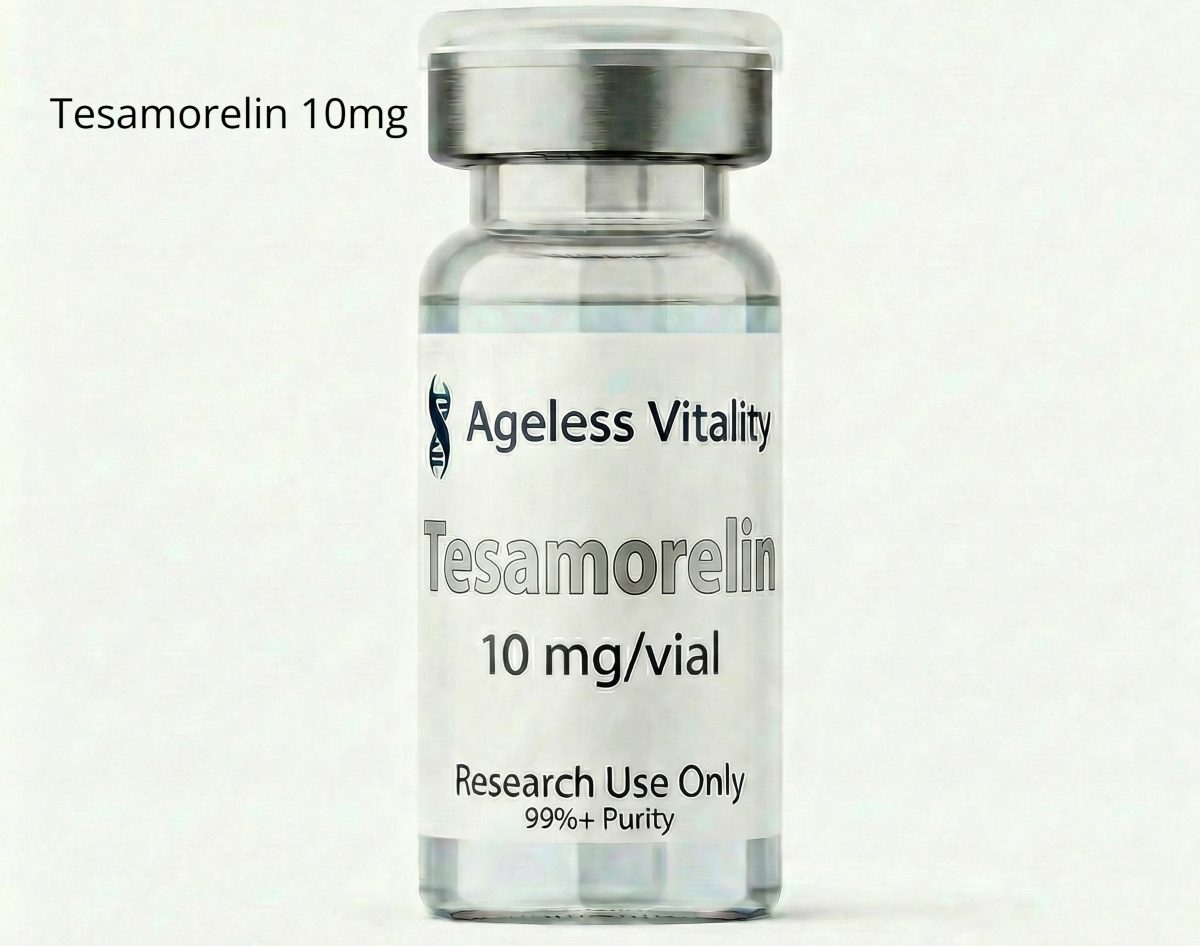
Tesamorelin is a 44-amino acid GHRH analog consisting of the full 44-amino acid sequence of GHRH with a trans-3-hexenoic acid group attached to the N-terminus. This structural modification documented in a 2020 Endocrine Reviews study enhances the peptide’s stability against dipeptidyl peptidase IV (DPP-IV) degradation, extending its half-life and producing a more sustained GH-releasing effect.
This structural advantage translates directly into research utility: tesamorelin’s longer active window allows protocols designed to study sustained GH stimulation, prolonged IGF-1 elevation, and cumulative effects on fat distribution applications where sermorelin’s rapid clearance would be limiting.
Tesamorelin vs Sermorelin: Comprehensive Research Comparison Table
| Feature | Tesamorelin | Sermorelin |
|---|---|---|
| Peptide Type | Modified GHRH analog (44 AA) | Natural GHRH fragment (29 AA) |
| FDA Approval | Yes – HIV lipodystrophy (2010) | No – research/compounding only |
| Primary Goal | Visceral fat reduction | Anti-aging & GH optimization |
| GH Release | Strong & sustained | Natural pulsatile |
| IGF-1 Increase | High (+20–30%) | Moderate (+10–15%) |
| Visceral Fat Loss | Up to 15–20% over 26 weeks | Gradual, indirect via GH |
| Muscle Recovery | Fast | Moderate & steady |
| Sleep Improvement | Limited | Strong (deep sleep phases) |
| Hormonal Balance | Moderate | Excellent |
| Side Effects | Water retention, joint pain, glucose changes | Mild injection-site reactions |
| Cost (Research) | 2–3x higher | Most affordable GHRH option |
| Half-Life | ~30 min (enhanced stability) | ~11–12 minutes |
| Best For | Metabolic / fat-loss research | Longevity, recovery, endocrine studies |
Fat Loss Research: Where Tesamorelin Dominates
The most cited difference between these two peptides is visceral fat reduction. Visceral adipose tissue (VAT) the fat surrounding internal organs is more metabolically active and more dangerous than subcutaneous fat, linked to insulin resistance, cardiovascular disease, and systemic inflammation.
Tesamorelin’s FDA approval in 2010 was specifically for HIV-associated lipodystrophy, following pivotal trials published in The Lancet that demonstrated an approximately 15% reduction in visceral adipose tissue over 26 weeks. Subsequent research has extended these findings to broader metabolic populations, with some studies reporting reductions of up to 20% in abdominal fat over a 6-month research period.
Sermorelin, by contrast, supports fat loss through a more indirect pathway: by restoring natural GH pulsatility, it gradually improves lipolysis throughout the body. This produces modest, progressive fat loss without the targeted visceral specificity that makes tesamorelin unique. For research models where measurable visceral fat change is the primary endpoint, tesamorelin is the clear choice.
A 2022 systematic review in Growth Hormone & IGF Research identified 47 clinical trials involving Tesamorelin versus 23 for Sermorelin reflecting the significantly higher clinical investment in Tesamorelin’s metabolic applications.
In the broader context of fat-loss peptide research, the Fat Loss Peptides guide at Ageless Vitality Peptides offers a comprehensive overview of GLP-1, triple agonist, and GH-based approaches in current research.
IGF-1 Signaling: Anabolic and Anti-Aging Effects
Both peptides stimulate GH secretion, which, in turn, triggers IGF-1 synthesis in the liver. IGF-1 is responsible for most of the tissue-building, metabolic, and regenerative effects associated with growth hormone optimization. However, the magnitude and duration of IGF-1 elevation differ significantly between the two compounds.
Tesamorelin consistently demonstrates stronger and more sustained IGF-1 elevation in research comparisons a direct consequence of its longer half-life and enhanced receptor engagement. This makes it preferable for studies examining anabolic signaling, muscle protein synthesis rates, or recovery speed from tissue damage.
Sermorelin elicits shorter-lived IGF-1 responses, making it better suited for research on transient endocrine signaling, the relationship between sleep architecture and GH pulses, and the physiological GH axis in aging models. For studies on IGF-1 LR3 before and after effects, note that direct IGF-1 analogs operate differently than GHRH-stimulated IGF-1 a critical distinction for protocol design.
Sleep, Recovery & Anti-Aging: Sermorelin’s Strengths
While tesamorelin wins on fat loss metrics, sermorelin has a well-documented advantage in sleep quality and anti-aging research applications. The reason lies in its alignment with the body’s endogenous GH rhythm.
The majority of natural GH secretion occurs during slow-wave (deep) sleep. Sermorelin supports and amplifies this nocturnal pulse without overriding the feedback loop meaning research subjects maintain physiological GH patterns rather than experiencing supraphysiological spikes. This preserves the neuroendocrine rhythm that regulates cellular repair, skin collagen turnover, hippocampal memory consolidation, and immune function.
•Improved slow-wave sleep within 2–4 weeks of sermorelin protocols
•Enhanced collagen synthesis and skin elasticity over 3–6 months
•Improved morning cognitive clarity and focus consistency
•Reduced recovery time between training sessions in exercise research models
•Sustained hormonal balance without disrupting negative feedback mechanisms
Researchers studying tissue repair, regeneration, or inflammation may also want to explore complementary peptides. The BPC-157 5mg peptide and TB-500 (Thymosin Beta-4) 5mg are widely studied for connective tissue repair and systemic healing processes that complement GH optimization research.
| Peptide | Research Dose | Frequency | Protocol Length |
|---|---|---|---|
| Tesamorelin | 1–2 mg | Once daily (SC) | 12–26 weeks |
| Sermorelin | 0.2–1.0 mg | Daily or 5x/week (SC) | 3–6 months (ongoing) |
All dosage information is provided for research reference only. These compounds are not for human use. Protocols should only be conducted in properly equipped laboratory environments by qualified researchers.
Expected Research Timeline: What the Data Shows
| Timeframe | Tesamorelin Results | Sermorelin Results |
|---|---|---|
| Week 1–2 | IGF-1 begins rising; mild water retention possible | Sleep quality improves; energy uptick |
| Week 3–4 | Early lipolysis signals; abdominal bloat reduction | Recovery between sessions improves |
| Week 6–8 | Visible waistline reduction in some research models | Gradual body composition shifts begin |
| Week 12–26 | 15–20% visceral fat reduction (clinical data) | Sustained GH optimization; anti-aging markers |
Research protocols comparing these timelines often use the first 4–8 weeks to establish biomarker baselines before evaluating outcomes. Tesamorelin’s measurable visceral fat changes typically appear around weeks 8–12, with full statistical significance at 26 weeks in clinical data. Sermorelin’s most reliable early endpoint is sleep quality, followed by gradual metabolic improvements in later weeks.
Side Effects & Safety Profile: A Research Perspective
Tesamorelin Side Effects
•Fluid retention/edema related to IGF-1 rise and sodium reabsorption
•Arthralgia (joint discomfort) common with elevated GH
•Glucose dysregulation potential insulin resistance at higher doses
•Injection site reactions redness, swelling at the subcutaneous administration site
•Rare: peripheral neuropathy, carpal tunnel symptoms in long protocols
Sermorelin Side Effects
•Mild injection site irritation most common and typically transient
•Flushing or warmth at the injection site
•Rare: headache or dizziness post-injection
•Minimal systemic effects best-in-class safety profile among GHRH analogs
Both peptides carry a theoretical risk of promoting insulin resistance at excessive GH levels a standard consideration in any GH-elevating research. Tesamorelin’s stronger stimulation means this risk requires closer monitoring in metabolic research designs. Researchers studying semaglutide side effects, timing, and GLP-1 interaction profiles may find useful parallel data in the ” How long do semaglutide side effects last, which details temporal side effect patterns in GH-axis adjacent research.
Stacking & Combination Research: Can They Be Used Together?
Advanced research protocols sometimes explore combining GHRH analogs (such as sermorelin or tesamorelin) with GHRP peptides (such as ipamorelin or GHRP-6) to exploit a synergistic mechanism of GH release. The two axes GHRH receptor stimulation and ghrelin receptor stimulation act on the pituitary via distinct pathways, producing GH release that can exceed that produced by either compound alone.
Some researchers also study GHRH analogs alongside tissue-repair peptides. The BPC-157 and TB-500 blend (available as a 10mg research blend) represents a complementary approach, pairing GH-driven anabolic signaling from sermorelin or tesamorelin with targeted tissue healing a protocol particularly studied in musculoskeletal repair research models.
For researchers building out combination protocols involving CJC-1295 and ipamorelin alongside GHRH analogs, the CJC-1295 Ipamorelin complete research guide provides essential protocol context on receptor synergy and timing considerations.
Tesamorelin vs Sermorelin: Choosing the Right Peptide for Your Research
Choose Tesamorelin When:
•The primary research endpoint is visceral adipose tissue (VAT) reduction
•Rapid, measurable IGF-1 elevation is needed within a short protocol window
•Studying metabolic syndrome, abdominal obesity, or lipodystrophy models
•Extended protocol stability is required (tesamorelin resists enzymatic degradation better)
•Research budget supports a higher-cost compound for a shorter, intensive protocol
Choose Sermorelin When:
•The focus is long-term endocrine system support and hormonal homeostasis
•Sleep architecture and recovery pathways are the primary study variables
•Anti-aging, collagen synthesis, or longevity markers are being investigated
•A physiological, pulsatile GH release pattern is required to preserve feedback loops
•Cost efficiency over a long-duration protocol is a consideration
The comparison extends beyond just these two peptides. Both Tesamorelin and Sermorelin occupy distinct positions within the broader landscape of GH-axis research tools and understanding how they relate to compounds like IGF-1 LR3 or dual GHRH/GHRP combinations provides a fuller picture for designing rigorous GH-optimization studies.
Tesamorelin vs Sermorelin in International Studies
Research interest in GHRH analogs has expanded significantly across North America, Europe, and Asia-Pacific research institutions over the past three years. In the United States, tesamorelin’s FDA approval status makes it a more accessible reference compound for IRB-approved studies. In the EU and UK, sermorelin-based research has seen increased activity, particularly in longevity medicine institutes and sports science departments.
In the Gulf Cooperation Council (GCC) region and South Asia, peptide research infrastructure is growing, with particular interest in metabolic disease models relevant to high-prevalence conditions like type 2 diabetes and abdominal obesity both areas where GHRH analog research has direct translational relevance. Researchers in these regions sourcing high-purity peptides with verified Certificates of Analysis (COA) should prioritize vendors with documented third-party testing, such as those available through Ageless Vitality Peptides COA Vault.
Conclusion:
After a comprehensive evaluation of molecular structure, clinical data, IGF-1 signaling, fat-loss efficacy, side-effect profiles, and long-term research utility, the answer is nuanced but clear.
Tesamorelin is the superior choice when the research objective involves visceral fat reduction, strong IGF-1 elevation, or rapid metabolic outcomes. Its FDA-approval history, enhanced structural stability, and clinical evidence base (47 trials and counting) make it the gold-standard GHRH analog for metabolic research.
Sermorelin is the optimal choice for research centered on long-term hormonal homeostasis, sleep quality, anti-aging mechanisms, and sustainable endocrine support. Its physiological alignment with the body’s natural GH rhythm, superior safety profile, and cost efficiency make it the preferred compound for extended research protocols.
Both peptides represent powerful research tools when used in properly controlled laboratory settings. For researchers building comprehensive GH-axis studies, understanding how each peptide positions within a broader peptide stack including GHRP companions, tissue-repair compounds, and IGF-1 analogs is essential for rigorous experimental design.
Frequently Asked Questions (FAQs)
What is the main difference between Tesamorelin vs Sermorelin?
Tesamorelin is a 44-amino-acid modified GHRH analog with enhanced stability and strong visceral fat-reducing capabilities, backed by FDA approval. Sermorelin is a 29-amino-acid natural GHRH fragment that produces physiological, pulsatile GH release with an excellent safety profile ideal for anti-aging and recovery research.
Which peptide is better for fat loss research?
Tesamorelin is significantly more effective for visceral fat reduction, with clinical trials showing a 15–20% reduction in VAT over 26 weeks. Sermorelin supports gradual, whole-body improvements in fat metabolism by restoring GH pulsatility.
Is Sermorelin safer than Tesamorelin for research models?
Yes. Sermorelin’s side effect profile is minimal primarily limited to mild injection site reactions. Tesamorelin can cause water retention, joint discomfort, and glucose changes due to its stronger GH stimulation, requiring more careful monitoring in research protocols.
Do both peptides increase IGF-1 levels?
Yes, both elevate IGF-1 via GH stimulation. Tesamorelin produces a stronger and more sustained increase (~20–30%), while Sermorelin produces a shorter, more moderate rise (~10–15%), consistent with its pulsatile mechanism.
How long does Tesamorelin take to show results in research?
Early IGF-1 changes occur within 1–2 weeks. Measurable visceral fat reduction is typically observed at 8–12 weeks, with statistically significant results at 26 weeks, according to pivotal clinical trial data.
Can Sermorelin be used for sleep research?
Yes. Sermorelin is among the most studied peptides in sleep architecture research. Supporting natural GH pulses during deep sleep phases has been shown to improve slow-wave sleep and sleep efficiency within 2–4 weeks in research models.
Are these peptides available for research purposes?
Yes. Both Tesamorelin and Sermorelin are available as research-grade compounds. Ageless Vitality Peptides offers third-party COA-verified peptides for laboratory research purposes only. Browse the full peptide research catalog for current availability.
What is the cost difference between Tesamorelin and Sermorelin?
Tesamorelin is typically 2–3 times more expensive than sermorelin from research peptide vendors due to its more complex synthesis and enhanced structural modifications. Sermorelin is one of the most cost-effective GHRH analogs for long-duration research protocols.