
How to Reconstitute Peptides with Bacteriostatic Water | Complete Guide
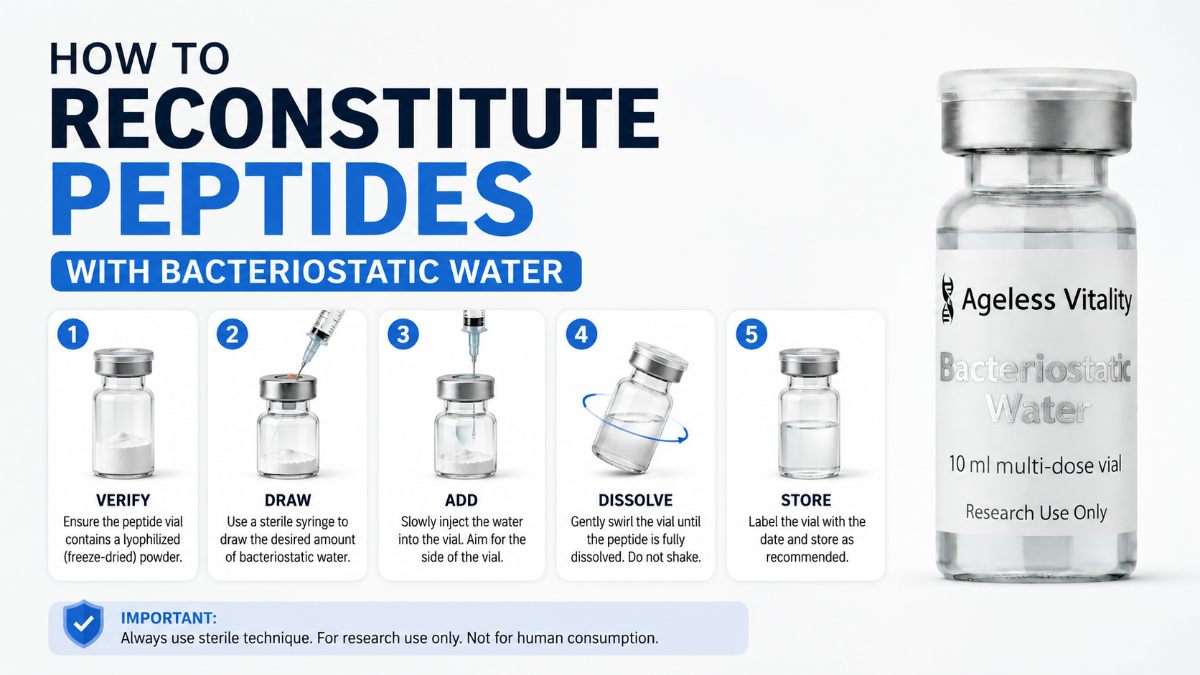
Reconstituting peptides with bacteriostatic water is straightforward: draw the correct volume of bacteriostatic water into a sterile syringe, inject it slowly along the inner wall of the lyophilized peptide vial, and swirl gently until the powder dissolves into a clear solution. Done correctly, this protocol preserves peptide integrity. It extends the usable life of the reconstituted compound making diluent selection and technique the two most consequential variables in How to Reconstitute Peptides with Bacteriostatic Water.
Lyophilized peptides are the standard form in which research-grade compounds are shipped and stored. Freeze-drying removes all moisture, which stabilizes the peptide structure during transit and long-term storage but before any laboratory application is possible, the compound must be returned to solution. That process is reconstitution, and the diluent used matters significantly. Bacteriostatic water sterile water containing 0.9% benzyl alcohol is the most widely used diluent in peptide research precisely because the benzyl alcohol acts as a preservative, inhibiting microbial growth and extending the stability window of the reconstituted solution to approximately 28 days under refrigeration, compared to 24 hours or less with plain sterile water.
This guide covers the complete peptide reconstitution protocol: how much bacteriostatic water to add, step-by-step mixing technique, concentration calculations, storage requirements, and the most common errors that compromise solution quality. Every section is written for researchers working with lyophilized peptides in a controlled laboratory setting.
These products are chemical reagents for research purposes only. Not intended for human use. Not intended to diagnose, treat, cure, or prevent any disease. Ageless Vitality Peptides is a chemical supplier only not a compounding pharmacy (503A) or outsourcing facility (503B) and does not sell to patients.
What Is Peptide Reconstitution? (Definition & Why It Matters in Research)
Peptide reconstitution is the process of dissolving a lyophilized (freeze-dried) peptide compound into a liquid diluent to produce a stable, workable solution for laboratory research. It is the required preparatory step before any peptide can be used in an experimental context and the quality of that step directly determines the integrity of everything that follows.
What Does “Reconstitution” Mean in Peptide Research?
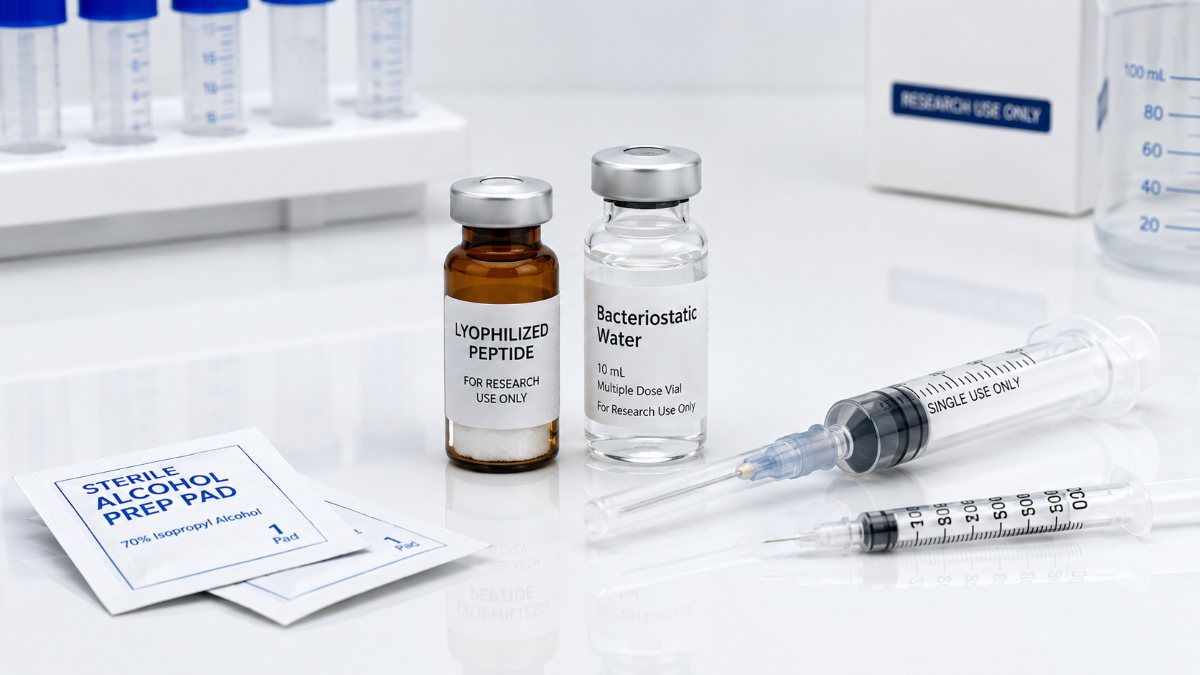
In peptide research, reconstitution refers to rehydrating a freeze-dried peptide by adding a measured volume of sterile diluent to the vial. The term is precise: it does not mean dissolving a raw powder into an arbitrary liquid, but rather restoring a deliberately dehydrated compound into solution under controlled conditions ideally without altering its molecular structure or biological activity in the process.
Lyophilization is used because it is the most effective method for long-term peptide preservation. The freeze-drying process removes water content under vacuum, arresting oxidation and microbial activity and leaving behind a stable, porous cake or powder. That stability is temporary by design the peptide is inert in lyophilized form and must be reconstituted before it has any utility in a research setting. How cleanly that transition from powder to solution is executed determines whether the compound remains structurally intact or is degraded before it ever reaches the experiment.
Why Bacteriostatic Water Is the Preferred Diluent for Peptide Reconstitution
Bacteriostatic water is the standard diluent for peptide reconstitution because it solves the two primary threats to a reconstituted solution: microbial contamination and premature degradation. It is sterile water for injection containing 0.9% benzyl alcohol a concentration sufficient to inhibit the growth of bacteria, mold, and other microorganisms that would otherwise proliferate in an aqueous solution over time.
The practical consequence of that antimicrobial action is a significantly extended usable window. A peptide reconstituted with plain sterile water is typically considered stable for no more than 24 hours at refrigeration temperature. The same peptide reconstituted with bacteriostatic water remains stable for approximately 28 days when stored at 2–8°C a difference that meaningfully increases research efficiency and reduces compound waste across multi-session experimental protocols. For a deeper look at how bacteriostatic water functions in peptide research, see our bacteriostatic water complete research guide.
Beyond preservation, bacteriostatic water is compatible with the vast majority of research peptides at standard reconstitution concentrations. Its pH and osmolality are well-suited to peptide solubility, and the benzyl alcohol content does not interfere with the structural integrity of most peptide sequences under normal laboratory conditions. For peptides that require a lower pH environment to dissolve certain longer-chain or hydrophobic sequences dilute acetic acid is sometimes used instead. Still, bacteriostatic water remains the default choice for standard research-grade peptides.
Lyophilized Peptides vs Reconstituted Peptides What Changes
The difference between a lyophilized peptide and its reconstituted form is entirely physical, not chemical provided reconstitution is performed correctly. The peptide sequence itself does not change. What changes is the state of the compound: from a dry, shelf-stable solid to an aqueous solution ready for use in laboratory applications.
In lyophilized form, a peptide is highly stable. Stored at the appropriate temperature typically −20°C for long-term archival storage a lyophilized peptide can remain viable for years without meaningful degradation. Once reconstituted, that stability window contracts sharply. The peptide is now in solution, where it is subject to hydrolysis, oxidation, and microbial activity. Temperature control becomes critical, and the clock on usability begins the moment the diluent enters the vial.
This is why researchers are advised to reconstitute only the volume needed for the near-term experimental window rather than preparing a large master stock. Aliquoting dividing a reconstituted solution into smaller working volumes that can be stored individually is standard practice in rigorous peptide research workflows, as it minimizes the need for repeated freeze-thaw cycles that progressively compromise solution quality over time.
Materials Required Before You Begin
Successful peptide reconstitution depends as much on preparation as it does on technique. Having the correct materials assembled before opening any vial eliminates mid-process improvisation the most common source of contamination errors in laboratory reconstitution workflows.
Bacteriostatic Water Specifications and Sourcing for Research Use
Not all water intended for injection is equivalent, and the distinction matters in a research context. Bacteriostatic water for injection is manufactured to USP standards, supplied in multi-dose vials, and preserved with 0.9% benzyl alcohol. That specific formulation makes it suitable for peptide reconstitution the benzyl alcohol content inhibits microbial growth across repeated vial entries, which is a routine requirement when working with a peptide stock over days or weeks.
Research-grade bacteriostatic water should be sourced from a reputable chemical supplier and supplied in sealed, sterile multi-dose vials typically 10ml or 30ml. Single-use sterile water vials, saline vials, and water for irrigation are not suitable substitutes. Each has a different preservative profile, osmolality, or sterility classification, making them either incompatible with peptide chemistry or unsafe to use in a multi-draw reconstitution workflow.
Sterile Syringes and Needle Gauges for Peptide Work
The syringe is the primary instrument of precision in reconstitution, and selecting the correct specification prevents both measurement error and unnecessary disruption to the peptide powder. For most research reconstitution work, a 1ml insulin syringe is the standard choice. The graduated markings allow for accurate volume draws at the small scales typical of peptide reconstitution often between 0.5ml and 2ml of bacteriostatic water per vial and the low dead-space design minimizes diluent waste.
Needle gauge affects both draw speed and the seal integrity of the vial septum over repeated punctures. A 25–27 gauge needle is appropriate for most peptide reconstitution work: fine enough to preserve the vial septum across multiple entries without coring, but not so fine that drawing bacteriostatic water becomes unnecessarily slow. Higher-gauge needles 28 or 29 gauge are serviceable but can make controlled injection more difficult, particularly when directing flow along the vial wall rather than directly onto the powder.
All syringes used should be individually packaged, sterile, and single-use. Reusing syringes between draws, even from the same vial, introduces contamination risk that bacteriostatic water’s preservative properties alone cannot fully mitigate.
Amber or Opaque Storage Vials for Reconstituted Peptides
Once a peptide has been reconstituted, the vial it occupies becomes its storage environment for the duration of its usable life. Standard clear borosilicate glass vials are adequate for short-term bench use, but amber glass vials are strongly preferred for peptides stored beyond the immediate session. The amber tint filters out ultraviolet and visible light wavelengths that accelerate photodegradation a process that can compromise peptide structure even at refrigeration temperatures when clear vials are used under laboratory lighting.
Vials used for reconstituted peptide storage should have crimped or screw-cap closures fitted with silicone or PTFE-lined septa that can be punctured cleanly and reseal reliably. If the reconstituted solution will be aliquoted into smaller working volumes which is best practice for any stock intended to last multiple sessions sterile, individually sealed vials should be used for each aliquot and labeled immediately after filling.
Alcohol Swabs and Aseptic Technique Essentials
Aseptic technique is not a precaution reserved for clinical settings it is a baseline requirement in any laboratory reconstitution workflow. Contaminating a peptide solution at the point of reconstitution renders the entire vial unusable and may compromise experimental results in ways that are not immediately visible.
The minimum requirement is a supply of 70% isopropyl alcohol swabs. Every vial septum both the bacteriostatic water vial and the peptide vial must be swabbed thoroughly before each needle insertion and allowed to air dry completely before puncturing. Introducing a needle through a wet septum can carry alcohol into the vial, which can destabilize the peptide at sufficiently high concentrations.
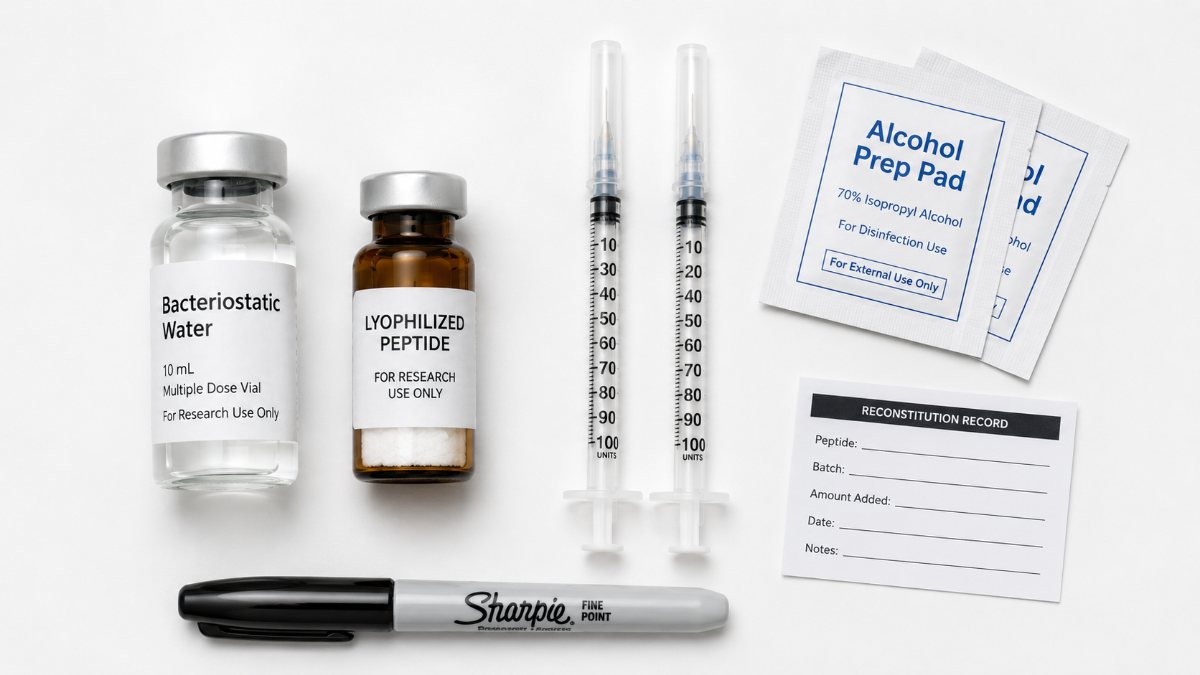
Beyond swabs, a clean, non-porous work surface wiped down with 70% isopropyl alcohol before beginning provides the foundation for contamination-free technique. Nitrile gloves are standard. A permanent marker for labeling vials immediately after reconstitution with peptide name, concentration, and date completes the materials checklist and ensures that no reconstituted vial enters storage without a complete, legible identification record.
How Much Bacteriostatic Water to Add to Peptides (Dosing & Ratio Calculator)
The standard reconstitution ratio used in peptide research is 1–2mL of bacteriostatic water per 10mg vial, yielding a working concentration of 10,000 mcg/mL or 5,000 mcg/mL respectively though the correct volume depends entirely on the vial size and the target concentration required for the specific research protocol.
Accurate reconstitution is one of the most consequential steps in peptide research. Too much diluent produces a solution so dilute that precise micro-dosing becomes impractical. Too little results in a highly concentrated solution, where small syringe errors translate into large dose variations. Getting the math right before drawing the first volume is not optional it is the foundation of reproducible results. For a worked example using a common GLP-1 compound, see our guide on how long 10mg of retatrutide will last.
Standard Reconstitution Ratios Used in Research 1mg, 2mg, 5mg, 10mg Vials
Researchers typically target a round concentration that makes subsequent volume calculations straightforward. The most commonly used benchmark is 1,000 mcg/mL (1 mcg/µL), which simplifies per-dose calculations across a wide range of peptide protocols. The table below reflects ratios applied consistently across research settings:
| Vial Size | BAC Water Added | Resulting Concentration |
|---|---|---|
| 1 mg (1,000 mcg) | 1 mL | 1,000 mcg/mL |
| 2 mg (2,000 mcg) | 2 mL | 1,000 mcg/mL |
| 5 mg (5,000 mcg) | 2 mL | 2,500 mcg/mL |
| 5 mg (5,000 mcg) | 5 mL | 1,000 mcg/mL |
| 10 mg (10,000 mcg) | 2 mL | 5,000 mcg/mL |
| 10 mg (10,000 mcg) | 10 mL | 1,000 mcg/mL |
For larger vials (5mg, 10mg), researchers frequently use 2mL of bacteriostatic water to produce a denser working stock, then draw smaller volumes per dose. This approach reduces the total number of vials used across a study and minimizes repeated vial entries, thereby preserving sterility.
How to Calculate Concentration (mcg per Unit, mcg per 0.1mL)
Concentration is calculated with a single formula:
Concentration (mcg/mL) = Total Peptide (mcg) ÷ Volume of BAC Water Added (mL)
Once the concentration per mL is established, researchers most commonly work in 0.1mL (100 µL) increments the standard insulin syringe unit so the per-draw calculation becomes:
mcg per 0.1mL = Concentration (mcg/mL) ÷ 10
Applying this to a 10mg vial reconstituted with 2mL of bacteriostatic water:
- Total peptide: 10,000 mcg
- BAC water added: 2mL
- Concentration: 10,000 ÷ 2 = 5,000 mcg/mL
- Per 0.1mL draw: 5,000 ÷ 10 = 500 mcg per tick mark (0.1mL)
For a 5mg vial reconstituted with 5mL:
- Total peptide: 5,000 mcg
- BAC water added: 5mL
- Concentration: 5,000 ÷ 5 = 1,000 mcg/mL
- Per 0.1mL draw: 1,000 ÷ 10 = 100 mcg per tick mark (0.1mL)
Standardizing to 1,000 mcg/mL wherever vial size allows is a common practice precisely because it aligns each 0.1mL insulin syringe unit with exactly 100 mcg reducing calculation complexity and transcription errors during data recording.
Common Research Dosing Math Explained Step by Step
The practical workflow for any reconstitution calculation follows four steps:
Step 1 Convert the vial to micrograms: A 5mg vial contains 5,000 mcg. A 10mg vial contains 10,000 mcg. This is always the starting number.
Step 2 Decide the target concentration: Most researchers choose 1,000 mcg/mL for simplicity, or 5,000 mcg/mL for a denser stock with a larger vial. The target concentration determines how much bacteriostatic water to add, not the other way around.
Step 3 Calculate BAC water volume: Divide total mcg by target concentration: a 5mg vial targeting 1,000 mcg/mL requires 5,000 ÷ 1,000 = 5mL of bacteriostatic water.
Step 4 Calculate the draw volume for each research dose: Divide the intended dose (mcg) by the concentration (mcg/mL) to get volume in mL. For a 250 mcg research dose from a 1,000 mcg/mL solution: 250 ÷ 1,000 = 0.25mL (25 units on a U-100 insulin syringe).
Keeping a printed or digital reconstitution log for each vial recording the date of reconstitution, the volume of BAC water added, and the resulting concentration is standard practice in research settings and strongly recommended for data integrity.
What Happens If You Add Too Much or Too Little Bacteriostatic Water
Too much bacteriostatic water produces an over-diluted solution. While the total peptide content in the vial remains unchanged, each drawn volume delivers a smaller mass of peptide than intended. In a protocol targeting 250 mcg per draw, an over-diluted solution may unknowingly deliver 80–120 mcg enough variance to compromise research reproducibility. Over-dilution also extends the number of draws needed per vial, increasing vial entry frequency and the cumulative contamination risk over a study’s duration.
Too little bacteriostatic water results in a highly concentrated solution, where very small syringe volumes sometimes as low as 5–10 µL correspond to full research doses. At this scale, the mechanical precision of a standard insulin syringe becomes a limiting factor. Even a half-unit deviation on a U-100 syringe represents a 5 µL error, which, as a percentage of the total draw volume, becomes significant. Researchers using high-concentration stocks typically employ lower-volume syringes (0.3mL or 0.5mL) with finer graduation marks to compensate.
There is also a stability consideration. Bacteriostatic water contains 0.9% benzyl alcohol as a preservative, which inhibits microbial growth in reconstituted solutions stored at 4°C for up to 30 days. Insufficient diluent volume means the benzyl alcohol concentration relative to the total solution volume increases, which, in some peptide classes, can affect stability over the storage window. Maintaining the recommended 1–2mL minimum per 5–10mg vial keeps the preservative ratio within its intended functional range.
Step-by-Step Peptide Reconstitution Protocol with Bacteriostatic Water
Reconstituting a peptide vial with bacteriostatic water requires seven steps: sterilize the workspace, swab the septa, draw the correct BAC water volume, inject slowly down the vial wall, swirl gently, confirm full dissolution, then label the vial before storage. Each step exists for a specific reason skipping any one of them introduces contamination risk, degrades peptide integrity, or compromises the accuracy of every subsequent draw from that vial.
Proper reconstitution technique is not difficult, but it is precise. The following protocol reflects standard laboratory practice for research-grade lyophilized peptides and applies uniformly across vial sizes from 1mg through 10mg. This same workflow applies whether you’re working with a BPC-157 and TB-500 combination or a standalone growth hormone secretagogue like CJC-1295/Ipamorelin.
Step 1 Prepare Your Workspace and Sterilize Surfaces
Before handling any vial or syringe, the work surface must be clean and stable. In a research setting this means a disinfected benchtop or biosafety cabinet wiped down with 70% isopropyl alcohol and allowed to air-dry completely. Alcohol that has not fully evaporated can transfer to vial surfaces, introducing trace contamination into the solution.
Gather everything needed before beginning: the peptide vial, the bacteriostatic water vial, one or two appropriately sized syringes (typically a 1mL or 3mL syringe for drawing BAC water, and a U-100 insulin syringe for subsequent research draws), fresh alcohol prep pads, and a permanent marker or label for post-reconstitution identification. Having all materials within reach before opening anything reduces unnecessary movement and minimizes the time vial septa remain exposed between swabbing and injection.
Step 2 Swab Vial Septa with Alcohol and Allow to Dry
Both vial septa the rubber stopper on the peptide vial and the rubber stopper on the bacteriostatic water vial must be swabbed with a fresh 70% isopropyl alcohol prep pad immediately before needle entry. A single firm wipe in one direction is sufficient. Scrubbing back and forth does not improve sterility and can deposit fibers on the septum surface.
The critical detail most researchers overlook is the drying step. Isopropyl alcohol requires 10–15 seconds to fully evaporate after application. Inserting a needle through a wet septum carries alcohol into the vial, which can denature sensitive peptide structures. This is particularly relevant for peptides with disulfide bonds or complex tertiary structures. Waiting the full drying time adds under 30 seconds to the process and meaningfully protects solution integrity.
Step 3 Draw the Correct Volume of Bacteriostatic Water
Using the reconstitution calculation established for the specific vial (refer to concentration targets discussed in the dosing ratio guide), draw the intended BAC water volume into the syringe. Pull the plunger slightly past the target volume, then depress slowly back to the exact graduation mark. This technique expels any air bubble that may have entered during the draw and ensures the measured volume is accurate to the graduation.
For a 10mg peptide vial being reconstituted to a 5,000 mcg/mL working stock, this means drawing exactly 2mL of bacteriostatic water. For a 5mg vial targeting 1,000 mcg/mL, it means drawing 5mL in which case a 5mL or 10mL syringe is more appropriate than a 1mL syringe, as forcing 5mL through a single small-barrel draw wastes time and increases the risk of measurement error across multiple refills.
Step 4 Inject Bacteriostatic Water Slowly Down the Vial Wall (Not Directly onto Powder)
This step is the most technically important in the entire protocol, and the one most frequently performed incorrectly. Insert the needle through the centre of the swabbed, dry septum at a slight angle so the tip is positioned against the inner glass wall of the vial rather than aimed at the lyophilized powder cake at the bottom.
Depress the plunger slowly ideally over 10–20 seconds for a 1–2mL volume allowing bacteriostatic water to run down the vial wall and pool gently around the powder rather than hitting it directly with force. Forceful injection onto the powder mechanically disrupts the peptide structure and generates foam. Foaming is not cosmetic it indicates protein denaturation at the air-liquid interface, and a foamed solution should not be used in research protocols that require concentration accuracy. Studies on peptide stability have confirmed that mechanical agitation during reconstitution is among the primary causes of pre-storage degradation in lyophilized biologics.
Step 5 Swirl Gently Never Vortex or Shake
Once bacteriostatic water has been introduced, place the vial between the palms and roll it slowly in a circular motion for 15–30 seconds. The goal is to encourage the lyophilized powder to dissolve uniformly into solution without generating shear force or air bubbles.
Vortexing and shaking are both contraindicated for peptide reconstitution. Both create high-energy agitation that damages peptide secondary structure and introduces air into the solution. The same principle applies to vigorous stirring or flicking the vial. If the powder does not dissolve immediately, allow the vial to sit undisturbed at room temperature for 5–10 minutes, then resume gentle swirling. Some larger or more complex peptides particularly those with high molecular weights such as semaglutide (4,113 Da) or IGF-1 LR3 require additional dissolution time and should never be forced into solution through agitation.
Step 6 Confirm Full Dissolution and Check for Clarity
Hold the reconstituted vial up to a light source and inspect the solution carefully. A correctly reconstituted peptide solution is clear to slightly opalescent, with no visible particulate matter, no undissolved powder at the base, and no persistent foam layer at the surface.
Cloudiness that does not resolve after an additional 5 minutes of rest and gentle swirling may indicate incomplete dissolution, peptide aggregation, or in rare cases incompatibility between the specific peptide and the diluent. Visible particulates or a precipitate at the bottom of the vial after full dissolution time has elapsed indicate the solution should not be used. Discard and reconstitute from a new vial. A clear solution with a faint color tint (pale yellow is common with some peptides) is generally acceptable, but any unusual coloration or turbidity warrants documentation and, if persistent, consultation of the product’s COA for reference standards.
Step 7 Label Vial with Peptide Name, Concentration, and Reconstitution Date
Immediately after confirming a clean solution, label the vial before setting it down. Memory is not a reliable substitute for physical labeling, particularly in multi-peptide research settings where vials of similar appearance may be stored in proximity.
The label should include at least 3 data points: the peptide name or identifier, the calculated concentration (e.g., 5,000 mcg/mL), and the reconstitution date. Adding the BAC water volume used and the researcher’s initials is best practice for shared lab environments. Reconstituted peptides stored in bacteriostatic water at 4°C are stable for up to 30 days the reconstitution date on the label is the only reliable mechanism for enforcing that window. Vials without dates should be treated as expired regardless of apparent solution quality.
Store the labeled vial upright, at 4°C, protected from light. Do not freeze a reconstituted solution; freezing a BAC water solution can cause the benzyl alcohol preservative to crystallize, disrupting both its preservative function and the uniformity of peptide concentration across subsequent draws.
Mixing Peptides with Bacteriostatic Water Technique Errors to Avoid
The most damaging errors in peptide reconstitution are not calculation mistakes they are technique failures that degrade the peptide before a single draw is taken. Injecting directly onto lyophilized powder, agitating the solution, compromising aseptic conditions, and misreading solution clarity are the four errors most likely to produce unreliable research results from an otherwise high-quality vial.
Understanding why each error causes harm not just that it should be avoided is what separates a reproducible research protocol from one that introduces uncontrolled variables during reconstitution.
Why You Should Never Inject Directly onto Lyophilized Powder
Lyophilized peptide powder is not simply dehydrated peptide waiting to be rehydrated. Freeze-drying preserves peptide structure in a fragile crystalline matrix, and the powder cake at the bottom of a research vial is mechanically vulnerable. When a stream of bacteriostatic water is injected forcefully onto that powder, the hydraulic impact physically disrupts the matrix before dissolution begins.
The consequence is twofold. First, mechanical disruption generates localized turbulence at the powder surface, creating an air-liquid interface the precise environment where peptide denaturation occurs most rapidly. Proteins and peptides preferentially unfold at air-liquid interfaces because hydrophobic residues, normally buried within the peptide’s folded structure, are drawn toward the air phase. Once unfolded at this interface, many peptides do not refold correctly even after full dissolution. Second, direct injection frequently causes immediate foaming, which researchers sometimes dismiss as cosmetic. It is not. Foam is visible evidence of denaturation in progress, and a foamed solution has already lost a measurable portion of its active peptide content before the first draw.
The correct technique injecting slowly down the inner glass wall so liquid runs gently around the powder rather than onto it eliminates both failure modes. The powder dissolves from the periphery inward, the air-liquid interface remains minimal, and the solution clarifies without foam.
Vortexing vs Swirling Why Agitation Damages Peptide Structure
The instinct to vortex or shake a vial to speed dissolution is understandable, but it is consistently wrong for peptide solutions. Vortexing generates rotational shear forces that exceed the non-covalent bond energies holding peptide secondary and tertiary structures together. At the molecular level, this means alpha-helices unwind, beta-sheet arrangements distort, and disulfide bonds in cysteine-containing peptides are placed under mechanical stress.
Research on the stability of biologic drug formulations has consistently identified mechanical agitation as a primary degradation pathway for lyophilized peptides and proteins, with shaking-induced aggregation reducing recoverable active content by 15–40% in sensitive peptide classes, depending on molecular weight and structural complexity. For high-molecular-weight research peptides semaglutide at 4,113 Da, IGF-1 LR3 at 9,117 Da, or CJC-1295 at 3,367 Da this vulnerability is proportionally greater because larger peptides have more structural surface area exposed to shear forces.
Gentle palm-rolling or slow rotational swirling produces no meaningful shear force. The motion encourages uniform mixing through laminar flow rather than turbulence, and the slightly longer dissolution time it requires typically 30 seconds to several minutes depending on peptide and concentration is not a limitation. It is the correct process. If a peptide does not dissolve after swirling for a few minutes, the vial should be allowed to rest at room temperature for up to 15 minutes before resuming. Patience at this stage costs nothing; vortexing costs peptide integrity.
Contamination Risks and How to Maintain Aseptic Technique
Every point of contact between the external environment and the interior of a peptide vial is a potential contamination event. The bacteriostatic water in a reconstituted solution contains 0.9% benzyl alcohol specifically to inhibit microbial growth during the 30-day post-reconstitution storage window but benzyl alcohol is a bacteriostatic agent, not a sterilizing one. It suppresses microbial proliferation in an already-clean solution; it cannot remediate contamination introduced through poor technique.
The three most common contamination vectors in bench reconstitution are unswabbed or incompletely dried septa, reused needles, and unsterilized work surfaces. Reusing a needle between the BAC water vial and the peptide vial even within the same reconstitution session transfers trace peptide residue, potential particulates, and any surface contamination picked up during the first insertion into a second sterile environment. A fresh needle for each vial entry is not excessive caution; it is the minimum standard for aseptic technique.
Work surface contamination is frequently underestimated. A benchtop wiped with 70% isopropyl alcohol that has not been allowed to fully dry before vial placement will transfer residual alcohol to the vial exterior, which can then migrate onto gloved hands and subsequently onto septa during handling. The 30–60 seconds required for a properly wiped surface to air-dry is non-negotiable in any protocol where solution purity matters. In research environments where multiple peptide vials are handled in a single session, the surface should be re-wiped between vials if any liquid comes into contact with the bench.
What Cloudy or Particulate Solutions Indicate
A correctly reconstituted peptide solution is clear to very slightly opalescent. Any departure from this appearance is diagnostic information that should not be ignored or rationalized away.
Persistent cloudiness after full dissolution time and gentle swirling typically indicates one of three conditions: peptide aggregation, where individual peptide chains have clumped together rather than dispersing uniformly; incomplete dissolution due to insufficient BAC water volume or inadequate swirl time; or, less commonly, a cold-induced precipitation event if the vial was reconstituted immediately after removal from frozen storage without being allowed to reach room temperature first. Aggregated peptide solutions deliver inconsistent concentration per draw a cloudy solution that appears uniform may still have aggregated peptide clustered in regions of the vial, meaning consecutive draws may vary significantly in actual peptide content.
Visible particulates small floating fragments or a settled layer at the vial base after dissolution indicate more serious degradation or contamination. Particulates that were not present in the original lyophilized powder and appear after reconstitution suggest either microbial contamination introduced during the reconstitution process, peptide precipitation due to a pH or diluent incompatibility, or physical degradation of the lyophilized cake before reconstitution (often the result of improper pre-reconstitution storage, such as exposure to humidity or temperature cycling). In all cases, a solution with visible particulates should be documented and discarded. The research cost of a compromised vial is always lower than the cost of data generated from a degraded solution.
Storage Guidelines for Reconstituted Peptides
Once a peptide has been reconstituted, it should be stored in a refrigerator at 2–8°C (36–46°F) and used within the timeframe specified by the manufacturer or supplier, typically two to four weeks. Proper storage is the single biggest factor in preserving peptide integrity after mixing, since reconstituted peptides are far more vulnerable to degradation than their lyophilized (freeze-dried) form.
Refrigeration vs Freezing Temperatures for Different Peptide Classes
Most reconstituted peptides should be kept refrigerated rather than frozen, as repeated freeze-thaw cycles can cause physical damage to the peptide structure through ice crystal formation, leading to aggregation or loss of potency. Standard refrigeration at 2–8°C is appropriate for most common research peptides once mixed with bacteriostatic water.
Freezing reconstituted peptides is generally discouraged unless the supplier specifically indicates the compound is freeze-stable in solution. In those cases, a single freeze at -20°C may be acceptable, but the vial should not undergo multiple thaw cycles each cycle increases the risk of denaturation. Lyophilized (unmixed, powder form) peptides are the exception: they are typically stable at -20°C for extended periods and represent the best long-term storage option before reconstitution. For a broader overview of peptide research best practices, see our peptide sciences complete research guide.
Expected Stability Window After Reconstitution with Bacteriostatic Water
A reconstituted peptide stored properly in a refrigerator generally maintains stability for 2 to 4 weeks, though this varies by peptide sequence, concentration, and solution pH. Some more robust peptides may remain stable for up to six weeks under ideal refrigerated conditions, while more fragile or larger-chain peptides may begin to degrade meaningfully within one to two weeks.
This window assumes the vial is kept consistently cold, protected from light, and not repeatedly exposed to room temperature. Frequent removal from the refrigerator even briefly accelerates the degradation timeline, so minimizing temperature fluctuation is important for maintaining the full stability period.
Why Bacteriostatic Water Extends Shelf Life vs Sterile Water
Bacteriostatic water contains 0.9% benzyl alcohol, a preservative that inhibits bacterial growth over time. This is the primary reason bacteriostatic water is preferred for reconstitution: it allows a vial to be used multiple times over several weeks without the solution becoming contaminated with microbial growth.
Sterile water, by contrast, contains no preservative. Once a vial reconstituted with sterile water is opened or punctured, it should be used the same day, as there is no mechanism preventing bacterial proliferation in the solution. For any peptide intended for multi-dose or multi-week use, bacteriostatic water is the standard choice specifically because of this antimicrobial property not because it chemically stabilizes the peptide itself, but because it prevents the solution from becoming a growth medium for contaminants.
Signs of Peptide Degradation in Solution
A reconstituted peptide solution should remain clear and colorless (or near-colorless, depending on the specific compound). Visible changes are often the first indicator that something has gone wrong with storage or stability.
Cloudiness, visible particles, flocculation (clumping), or a color change are all signs that the peptide may have degraded, denatured, or become contaminated, and the solution should be discarded rather than used. A change in odor particularly a sour or “off” smell can also indicate microbial contamination, even if the solution still appears visually clear. If a vial has been left at room temperature for an extended period, exposed to light for prolonged stretches, or has passed its expected stability window, it’s reasonable to assume some loss of potency even without visible changes, since chemical degradation isn’t always apparent to the naked eye.
Bacteriostatic Water vs Other Diluents for Peptide Reconstitution
Bacteriostatic water is the most commonly used diluent for peptide reconstitution because it contains a preservative that allows multidose use over several weeks. In contrast, alternatives such as sterile water or saline are typically limited to single-use applications or specific peptide types. Choosing the right diluent depends on how the peptide will be stored, how often the vial will be accessed, and the peptide’s chemical properties. This consideration is relevant across a wide range of research targets from peptides studied for fat loss to those investigated for muscle growth or skin applications.
Bacteriostatic Water vs Sterile Water for Injection Key Differences
The core difference between these two diluents is the presence of benzyl alcohol. Bacteriostatic water contains 0.9% benzyl alcohol as a preservative, which inhibits bacterial growth, allowing a reconstituted vial to be punctured and used repeatedly over a period of weeks. Sterile water for injection contains no preservatives.
This makes sterile water appropriate only for immediate, single-use reconstitution. Once the vial is opened, any unused portion should be discarded the same day, as nothing prevents microbial growth in the solution. For peptides that will be drawn from multiple times over a stability window, bacteriostatic water is the standard choice. The only notable exception is reconstitution for certain sensitive applications where benzyl alcohol itself may interact with the peptide or is contraindicated. In those specific cases, sterile water is used despite its single-use limitation.
Bacteriostatic Water vs Saline Which Is Appropriate for Research Use?
Saline (0.9% sodium chloride solution) is sometimes used as a diluent, but it serves a different purpose than bacteriostatic water and isn’t a like-for-like substitute. Saline matches the body’s natural salt concentration, which can be relevant for certain applications. Still, standard saline typically does not contain a bacteriostatic preservative unless specifically formulated as “bacteriostatic saline” (which does include benzyl alcohol).
For most peptide reconstitution in a research context, bacteriostatic water is preferred over plain saline because the benzyl alcohol extends the usable shelf life of the reconstituted solution. If bacteriostatic saline is used, it can offer similar multi-dose stability benefits, but plain (non-bacteriostatic) saline carries the same single-use limitations as sterile water. The choice often comes down to what the supplier or protocol specifies for that particular peptide, since some compounds are more compatible with a saline-based solution than a water-based one.
Why Acetic Acid Is Sometimes Used and When It Applies
Acetic acid is occasionally used as a reconstitution diluent for specific peptides most notably those that are unstable or prone to degradation in a neutral-pH solution. Adding a small amount of dilute acetic acid lowers the solution’s pH, which can significantly improve the stability of certain peptide sequences during storage.
This isn’t a general-purpose substitute for bacteriostatic water, however. It’s typically used only when a peptide’s manufacturer or research literature specifically calls for an acidic reconstitution solution because the peptide’s chemically sensitive to neutral pH. One often-cited example involves peptides that are prone to gelling or aggregating when reconstituted with plain water but remain stable in solution when reconstituted with a dilute acetic acid solution instead. Outside these specific cases, bacteriostatic water remains the default choice, and acetic acid should be used only when there’s a clear, peptide-specific reason to do so.
Frequently Asked Questions (FAQs)
Can I Reconstitute Multiple Peptides in the Same Vial?
Mixing multiple peptides in one vial is generally not recommended. Different peptides may have unique stability requirements, degradation rates, and pH preferences. Combining them can make dosing less accurate and may reduce overall stability. Storing each peptide separately is the safest approach. For research involving combination protocols such as BPC-157 and TB-500, each compound is typically reconstituted individually.
How Long Does Bacteriostatic Water Keep Peptides Stable in Solution?
Most peptides remain stable for about 2–4 weeks when reconstituted with bacteriostatic water and refrigerated at 2–8°C. Some peptides may last longer under ideal conditions. Stability depends on the peptide itself and proper storage practices.
Does Reconstitution Order Matter Water Into Peptide or Peptide Into Water?
Yes, Bacteriostatic water should be added slowly into the peptide vial, preferably along the vial wall. This minimizes foaming and agitation that could damage the peptide. Gently swirl the vial instead of shaking it to aid dissolution.
Can I Re-Lyophilize a Reconstituted Peptide?
Re-lyophilizing a peptide is technically possible but not generally recommended. Proper freeze-drying requires specialized equipment and controlled conditions. Once reconstituted, peptides should be treated as liquid solutions and used within their recommended stability period.
What Is the Shelf Life of Bacteriostatic Water After Opening?
An opened vial of bacteriostatic water is typically considered usable for up to 28 days. The benzyl alcohol preservative helps prevent bacterial growth during this period. After 28 days, using a fresh vial is recommended for maximum safety and reliability.
For researchers looking to broaden their understanding of specific compounds before reconstitution, additional research guides are available: see the GHK-Cu peptide benefits guide, the tesamorelin vs sermorelin comparison, the retatrutide vs tirzepatide overview, and an overview of the best peptides for research across several categories.
⚠️ FDA Disclaimer: All content on this page pertains to chemical reagents intended for research purposes only. These products are not intended for human use and are not intended to diagnose, treat, cure, or prevent any disease. Ageless Vitality Peptides is a chemical supplier only not a compounding pharmacy (503A) or outsourcing facility (503B) and does not sell to patients.

