How Long Do Semaglutide Side Effects Last? A Week-by-Week Guide
If you have just started semaglutide sold as Ozempic for diabetes, Wegovy for weight loss, or Rybelsus as an oral option feeling nauseous, constipated, or exhausted in the first few weeks can make you wonder whether it is all worth it. You are not alone, and, more importantly, what you are experiencing will almost certainly not last.
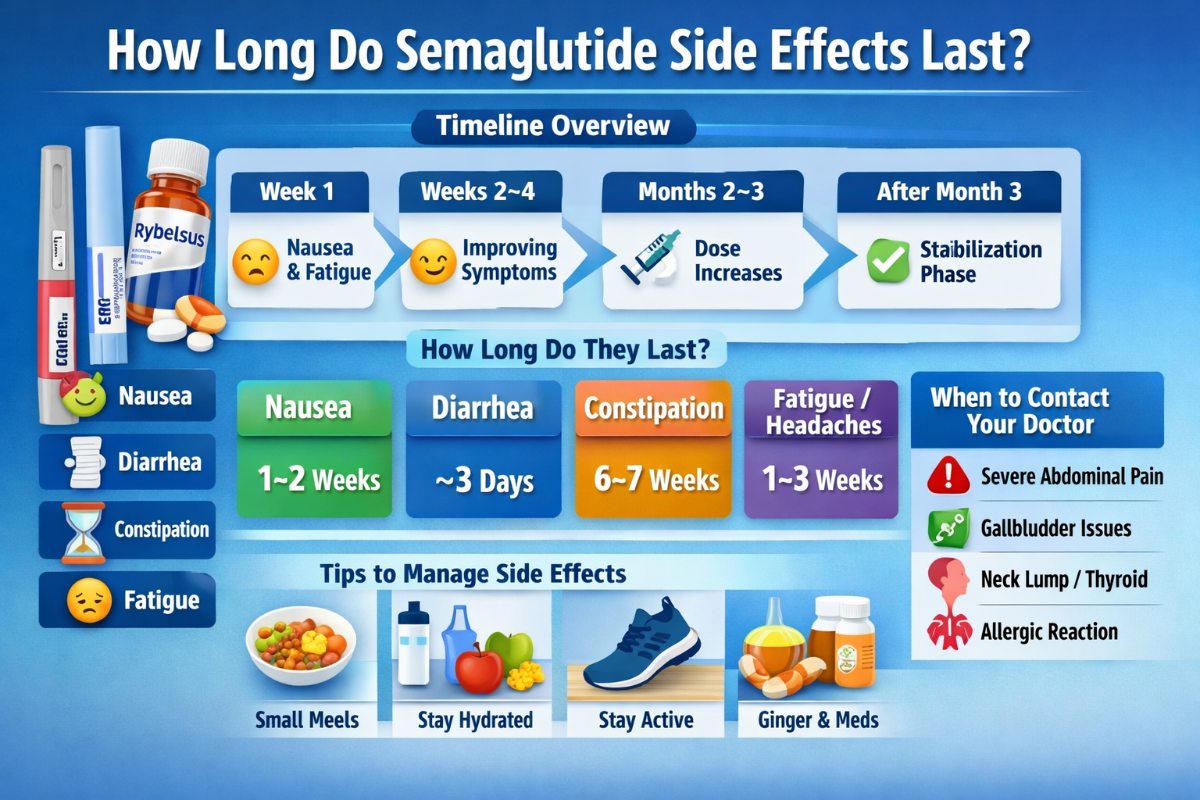
How Long Do Semaglutide Side Effects Last? For most people, semaglutide side effects follow a predictable pattern. They arrive early, peak during dose escalation, and gradually taper as your body adapts to the medication’s core mechanism: slowing the rate at which food leaves your stomach. The STEP clinical trials the largest studies ever conducted on semaglutide, found that nausea typically resolves within the first two weeks, diarrhea clears within days, and even constipation, the most persistent GI side effect, averages around 47 days before it improves.
What follows is a practical, evidence-based guide to every major semaglutide side effect how long each lasts, when it peaks, and exactly what you can do to get through it faster.
Nausea typically improves within 1–2 weeks. Diarrhea clears in around 3 days per episode. Constipation is the longest-lasting side effect, lasting an average of 6–7 weeks. Fatigue and headaches usually resolve within 1–3 weeks. Side effects often return briefly after each dose increase this is normal.
What Is Semaglutide and Why Does It Cause Side Effects?
Semaglutide is a GLP-1 receptor agonist (glucagon-like peptide-1 receptor agonist), a class of medication that mimics a gut hormone your body naturally produces after eating. It works by:
- Suppressing appetite signals in the hypothalamus (brain)
- Slowing gastric emptying food moves more slowly from your stomach to your intestine
- Stimulating insulin release and reducing glucagon production
- Stabilizing post-meal blood sugar levels
Slowing gastric emptying is the primary driver of most gastrointestinal (GI) side effects. Food sitting longer in your stomach causes nausea, bloating, and in some cases vomiting, especially when you first start treatment or increase your dose.
Semaglutide is sold under three brand names, each with slightly different dosing profiles:
- Ozempic® injectable, once-weekly, approved for type 2 diabetes and cardiovascular risk reduction
- Wegovy® injectable, once-weekly, higher dose (up to 2.4 mg), approved for weight management
- Rybelsus® oral tablet, taken daily, approved for type 2 diabetes
All three share the same active ingredient and similar side-effect profiles, though Wegovy at higher doses tends to cause more frequent GI symptoms. If you are researching semaglutide for weight loss, see our guide Best Peptides for Weight Loss Semaglutide and Tirzepatide for a full comparison of GLP-1, dual-agonist, and triple-agonist peptides.
How Long Does Each Semaglutide Side Effect Last? Quick Reference Table
The following durations are based on data from the STEP clinical trials (STEP 1–5), Novo Nordisk prescribing information for Ozempic® and Wegovy®, and clinical health reviews published in 2025–2026.
| Side Effect | How Common | Typical Duration | When It Peaks |
|---|---|---|---|
| Nausea | 44% on Wegovy 2.4 mg; 20% on Ozempic 1 mg | ~8 days (median) | Week 1–2 and after each dose increase |
| Diarrhea | ~30% of users | ~3 days per episode | First 2–4 weeks |
| Vomiting | ~24% on Wegovy | Days to weeks; improves over time | During dose escalation phase |
| Constipation | ~24% of users | ~47 days (6–7 weeks) | Ongoing; worse at higher doses |
| Bloating / Gas | ~10–15% | 1–4 weeks | First weeks of treatment |
| Fatigue / Tiredness | ~11% on Wegovy | 1–3 weeks | Early treatment; after dose increases |
| Headache | ~14% on semaglutide | Days; may recur | First weeks; often dehydration-related |
| Stomach Pain | ~10–20% | 1–3 weeks | Early treatment |
| Acid Reflux / GERD | ~6–10% | Weeks to months | Variable; may persist |
| Injection Site Reaction | <5% | 24–48 hours | After each injection |
Week-by-Week Timeline: What to Expect
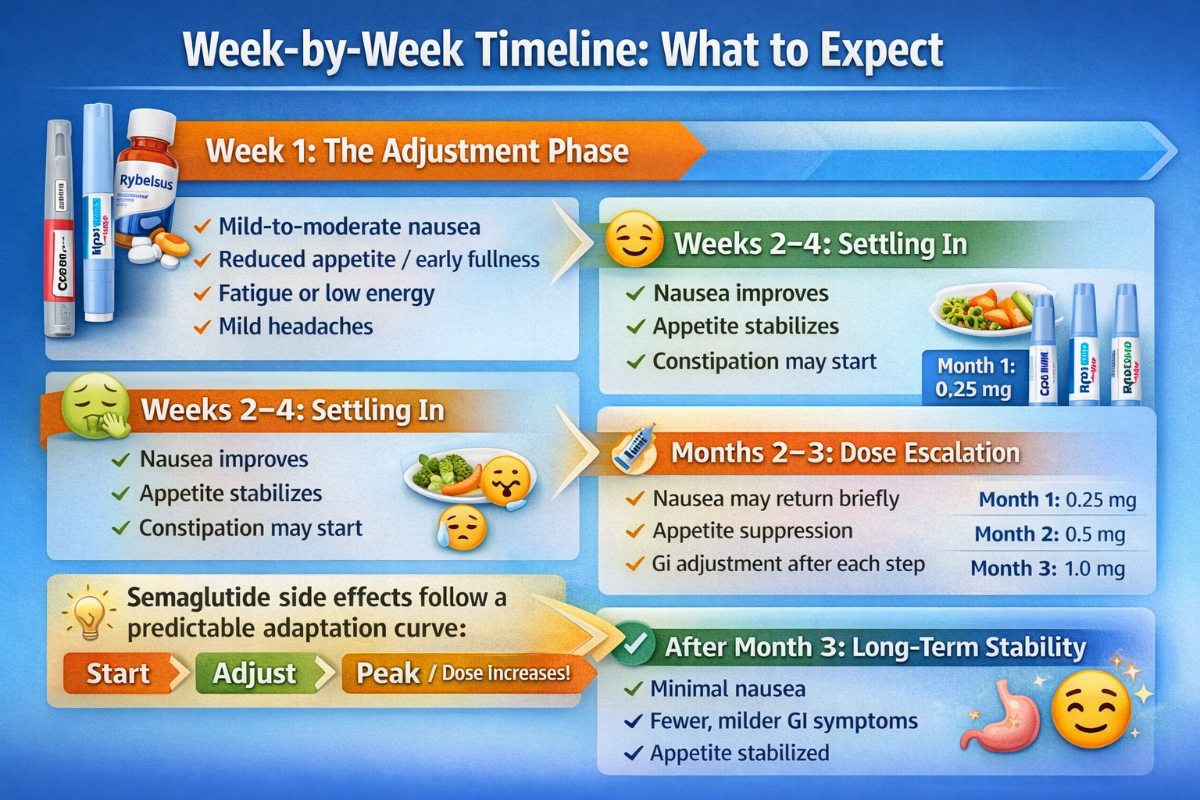
Week 1: The Adjustment Phase
Most people notice GI effects within hours to a few days of their initial injection or oral dose. The most common experience during week 1 includes:
- Mild-to-moderate nausea, especially after eating
- Reduced appetite and an earlier feeling of fullness
- Possible fatigue or low energy as calorie intake drops
- Mild headache, often linked to reduced food and fluid intake
The starting dose for Ozempic is 0.25 mg weekly. At this low dose, many people have minimal or no symptoms. Wegovy also starts at 0.25 mg for the first four weeks.
Weeks 2–4: Settling In
For most people, nausea begins to ease during weeks 2–4 as the body adapts to slower gastric emptying. Key observations during this phase:
- Nausea typically resolves for most people who experience it.
- Constipation may begin or worsen as the gut slows further.
- Energy levels often stabilize as eating patterns adjust.
- At the 4-week mark, the first dose increase typically occurs (from 0.25 mg to 0.5 mg on Ozempic/Wegovy), which can temporarily restart GI symptoms.
Months 2–3: Dose Escalation Phase
This is the most challenging period for many users. Doses are increased every 4 weeks on a titration schedule, and each increase can briefly reinstate GI side effects. The standard escalation schedule:
- Month 1: 0.25 mg weekly
- Month 2: 0.5 mg weekly
- Month 3: 1.0 mg weekly (Ozempic maintenance; Wegovy continues escalating)
- Months 4–6 (Wegovy only): 1.7 mg → 2.4 mg weekly maintenance dose
Clinical data from the STEP 5 trial (2-year follow-up) showed that the majority of participants tolerated semaglutide well in the long term, with fewer than 4% discontinuing due to side effects.
After Month 3: Long-Term Stability
Once you reach your maintenance dose and your body has adapted, most GI side effects significantly reduce in frequency and severity. Nausea is particularly likely to resolve. A small percentage of users experience ongoing constipation or acid reflux throughout treatment. Curious how semaglutide compares to the newer dual and triple agonist peptides in your maintenance phase? See Best Peptides for Weight Loss for a breakdown of Tirzepatide (GLP-1 + GIP) and Retatrutide (GLP-1 + GIP + Glucagon) and how their side effect profiles differ.
How Long Do Semaglutide Side Effects Last After Stopping?
This is one of the most searched questions about semaglutide and one of the most important things to understand before starting or discontinuing treatment.
Semaglutide has a half-life of approximately 1 week and takes about 5 weeks to fully clear your system after the last dose. This is why Ozempic and Wegovy are once-weekly injections — the drug naturally persists long enough to provide sustained coverage between doses.
What typically happens when you stop:
- GI side effects (nausea, bloating, constipation) begin to resolve within days to 2 weeks after stopping.
- Appetite and food cravings gradually return to pre-treatment levels within 2–4 weeks.
- Blood sugar levels may rise, especially in people with type 2 diabetes.
- Weight regain is well documented: the STEP 4 trial found that people who stopped after 20 weeks regained an average of 6.8% of their body weight over the following months.
Pregnancy Planning: Because semaglutide takes approximately five weeks to clear, Novo Nordisk and the FDA recommend stopping Ozempic or Wegovy at least two months before attempting to conceive. This extended window provides a safety buffer beyond the pharmacokinetic clearance timeline.
How to Manage Semaglutide Side Effects (Evidence-Based Strategies)
For Nausea
- Eat smaller, more frequent meals avoid large portions that sit in a slowed stomach.
- Avoid high-fat, greasy, fried, and very sweet foods during the adjustment period.
- Choose bland foods: crackers, plain rice, toast, applesauce, cooked vegetables.
- Stay upright for at least 30 minutes after eating; avoid lying down after meals.
- Ginger (tea, capsules, or lozenges) has evidence for mild nausea relief.
- For severe cases, your provider may recommend prescription ondansetron (Zofran®) or over-the-counter bismuth subsalicylate (Pepto-Bismol®).
For Constipation
- Drink at least 64 oz (8 glasses) of water daily semaglutide increases gut water absorption.
- Increase dietary fiber gradually (vegetables, whole grains, legumes)
- Gentle physical activity, such as a 20–30 minute walk, stimulates gut motility.
- Over-the-counter fiber supplements (such as psyllium husk) or osmotic laxatives may be appropriate ask your provider first.
- Avoid anti-diarrheal medications like loperamide, which can worsen constipation.
For Fatigue and Headaches
- Ensure adequate caloric intake fatigue often results from reduced eating rather than the drug itself.
- Stay well hydrated; headaches are frequently dehydration-related
- OTC acetaminophen (Tylenol®) or ibuprofen (Advil®) for headache management
- Allow adequate sleep and recovery time during dose escalation phases.
General Dose Management
The most effective way to reduce side effect duration and severity is slow, controlled dose titration. Research consistently shows that starting at the lowest dose (0.25 mg) and increasing only every four weeks exactly as prescribed minimizes GI disruption. Increasing doses faster than recommended significantly increases the risk of nausea and vomiting. For research-grade semaglutide with verified purity and batch-specific COA documentation, see our GLP1-S (Semaglutide) product page. All compounds are manufactured in the USA and tested by HPLC and Mass Spectrometry to ≥99% purity.
Serious Side Effects: When to Contact Your Doctor Immediately
These are rare but serious. Seek medical attention right away if you experience any of the following.
Pancreatitis
Semaglutide carries an FDA warning for pancreatitis (inflammation of the pancreas). Symptoms include severe, persistent abdominal pain that radiates to the back, often accompanied by nausea and vomiting. Stop taking semaglutide and seek emergency care immediately if you experience this.
Gallbladder Disease
Rapid weight loss associated with GLP-1 receptor agonist therapy can increase the risk of gallstones or gallbladder inflammation (cholecystitis). Symptoms include upper right abdominal pain, nausea, and fever after meals. Report these to your provider promptly.
Thyroid Tumors
Semaglutide carries a boxed warning the FDA’s strongest safety warning regarding the risk of medullary thyroid carcinoma (MTC) based on animal studies. This risk has not been confirmed in humans. Still, semaglutide is contraindicated in anyone with a personal or family history of MTC or Multiple Endocrine Neoplasia syndrome type 2 (MEN2) symptoms to watch for: a lump in your neck, hoarseness, or difficulty swallowing.
Gastroparesis
In rare cases, semaglutide has been associated with gastroparesis severe slowing of stomach emptying beyond the expected therapeutic effect. Symptoms resemble common GI side effects but are much more severe and persistent. Semaglutide is not recommended for people who already have gastroparesis.
Severe Allergic Reaction
Signs of anaphylaxis include difficulty breathing, swelling of the face, lips, or throat, rapid heartbeat, and dizziness. Call 911 immediately.
Diabetic Retinopathy Complications
In people with pre-existing diabetic retinopathy, rapid improvement in blood sugar control with semaglutide can temporarily worsen retinopathy symptoms. Inform your ophthalmologist of any history of diabetic eye disease before starting treatment.
Who Experiences More Side Effects?
Research shows certain factors increase the likelihood and duration of semaglutide side effects:
- Higher doses 2.4 mg Wegovy produce more side effects than 0.5 mg Ozempic
- Women may report more frequent GI side effects, partly because conditions like IBS are more prevalent in women, and ovarian hormone fluctuations influence gut sensitivity.
- People with a history of GI disorders such as IBS, GERD, or gastroparesis
- Rapid dose escalation moving faster than the recommended 4-week intervals.
- Overeating while on semaglutide the medication significantly reduces stomach capacity, and overeating directly triggers nausea.
- Alcohol use increases GI irritation and hypoglycemia risk in people with diabetes.
Foods and Habits That Make Side Effects Worse
While there is no official dietary restriction list for semaglutide, clinical experience consistently identifies these as common triggers for worsened GI symptoms:
- High-fat foods: fried foods, fast food, heavy creamy sauces
- Very sugary foods and drinks
- Carbonated beverages (increase bloating and gas)
- Alcohol (worsens nausea and GI irritation; increases hypoglycemia risk in people with diabetes)
- Large meals reduced gastric emptying means smaller meals are always better tolerated
- Eating right before bed
Keep a food diary for the first 4–8 weeks on semaglutide to identify your personal trigger foods. Everyone responds differently, and knowing your specific triggers can meaningfully reduce side effect duration and intensity.
Semaglutide vs. Ozempic vs. Wegovy: Are the Side Effects Different?
All three products contain semaglutide as the active ingredient, so the side effects are identical. Differences come down to dose and delivery method:
| Brand | Dose Range | Side Effect Frequency | Key Difference |
|---|---|---|---|
| Semaglutide (general) | Varies by formulation | Same type of side effects across all forms | Active ingredient in all three products |
| Ozempic® (injectable) | 0.25 mg – 2 mg weekly | Moderate (20–30% nausea at 1 mg) | Designed for diabetes; lower maintenance dose |
| Wegovy® (injectable) | 0.25 mg – 2.4 mg weekly | Higher (up to 44% nausea at 2.4 mg) | Highest approved dose; strongest weight-loss data |
| Rybelsus® (oral) | 3 mg – 14 mg daily | Moderate; comparable to injectable forms | Oral tablet; lower bioavailability but similar GI effects |
Wondering how semaglutide stacks up against Tirzepatide for side-effect profile and weight-loss outcomes? Read our full breakdown Best Peptides for Weight Loss Semaglutide and Tirzepatide.
What the STEP Clinical Trials Tell Us About Side Effect Duration
The STEP (Semaglutide Treatment Effect in People with obesity) trial program STEP 1 through STEP 5 provides the most rigorous clinical data on semaglutide’s side effects and their duration. Key findings:
- STEP 1 (68 weeks, 2.4 mg Wegovy, n=1,961): 44% of participants reported nausea, with the majority resolving it within the dose-escalation phase. The trial was published in the New England Journal of Medicine.
- STEP 4 (withdrawal study): People who stopped semaglutide after 20 weeks regained an average of 6.8% body weight within the following year, confirming that both the drug’s side effects and its benefits reverse after stopping.
- STEP 5 (2-year study): Fewer than 4% of participants discontinued due to side effects, demonstrating strong long-term tolerability when doses are managed according to protocol.
- SELECT trial (17,500+ participants): Confirmed semaglutide’s cardiovascular benefits and validated its long-term safety profile in people with obesity and established heart disease.
These trials were conducted by Novo Nordisk, the manufacturer of Ozempic, Wegovy, and Rybelsus, and published in The New England Journal of Medicine and Nature Medicine.
Semaglutide side effects are common, especially during the first month and after dose increases, but the vast majority are temporary. Here is a quick summary:
- Nausea: ~8 days median; mostly gone by weeks 2–4
- Diarrhea: ~3 days per episode
- Constipation: average 47 days; the longest-lasting common side effect
- Fatigue and headache: 1–3 weeks
- After stopping, it is fully cleared from your system in approximately 5 weeks
The key to shorter, milder side effects is following the recommended slow dose titration schedule, eating smaller meals, staying hydrated, and maintaining open communication with your prescribing provider about any symptoms that feel unmanageable. For research-grade semaglutide peptides, or to explore next-generation weight loss compounds like Tirzepatide (GLP2-T) and Retatrutide (GLP3-R), visit the Ageless Vitality Peptides Shop. All products are third-party tested to ≥99% purity with batch-specific Certificates of Analysis available in our COA Vault.
Frequently Asked Questions
How long does semaglutide nausea last?
Nausea is the most common side effect of semaglutide, reported by up to 44% of Wegovy users. Based on STEP trial data, the median duration of a nausea episode is approximately 8 days. Most people find that nausea significantly improves after the first 2–4 weeks of treatment. It may briefly return with each dose increase.
Do the side effects of semaglutide go away on their own?
Yes, in the vast majority of cases. Most GI side effects nausea, diarrhea, and bloating — resolve on their own as your body adapts to the medication, typically within 2-4 weeks. Constipation is the exception and may last 6–7 weeks. Serious side effects like pancreatitis require immediate medical attention and do not resolve on their own.
How long do Ozempic side effects last after stopping the medication?
Semaglutide has a half-life of approximately 1 week, meaning it takes about 5 weeks to clear your system after your last dose fully. Most GI side effects begin improving within days of stopping and should fully resolve within 1–2 weeks. Appetite typically returns within 2–4 weeks.
Is it normal for side effects to come back?
Yes, and this is expected. Each time your dose is increased typically every four weeks your body goes through a brief re-adjustment period similar to the first weeks of treatment. This is a normal adaptation response, not a sign that something is wrong.
When should I call my doctor about side effects from semaglutide?
Contact your doctor or seek emergency care for: severe persistent abdominal pain (pancreatitis), signs of gallbladder problems, a lump in your neck (thyroid warning), severe allergic reaction symptoms, or any side effects that are unmanageable or worsening over time.
Can semaglutide cause long-term side effects?
For most people, semaglutide is considered safe for long-term use. The 2-year STEP 5 trial found strong tolerability. Rare serious risks thyroid, pancreatic, and gallbladder complications can potentially occur at any point during treatment and require ongoing monitoring by your healthcare provider.